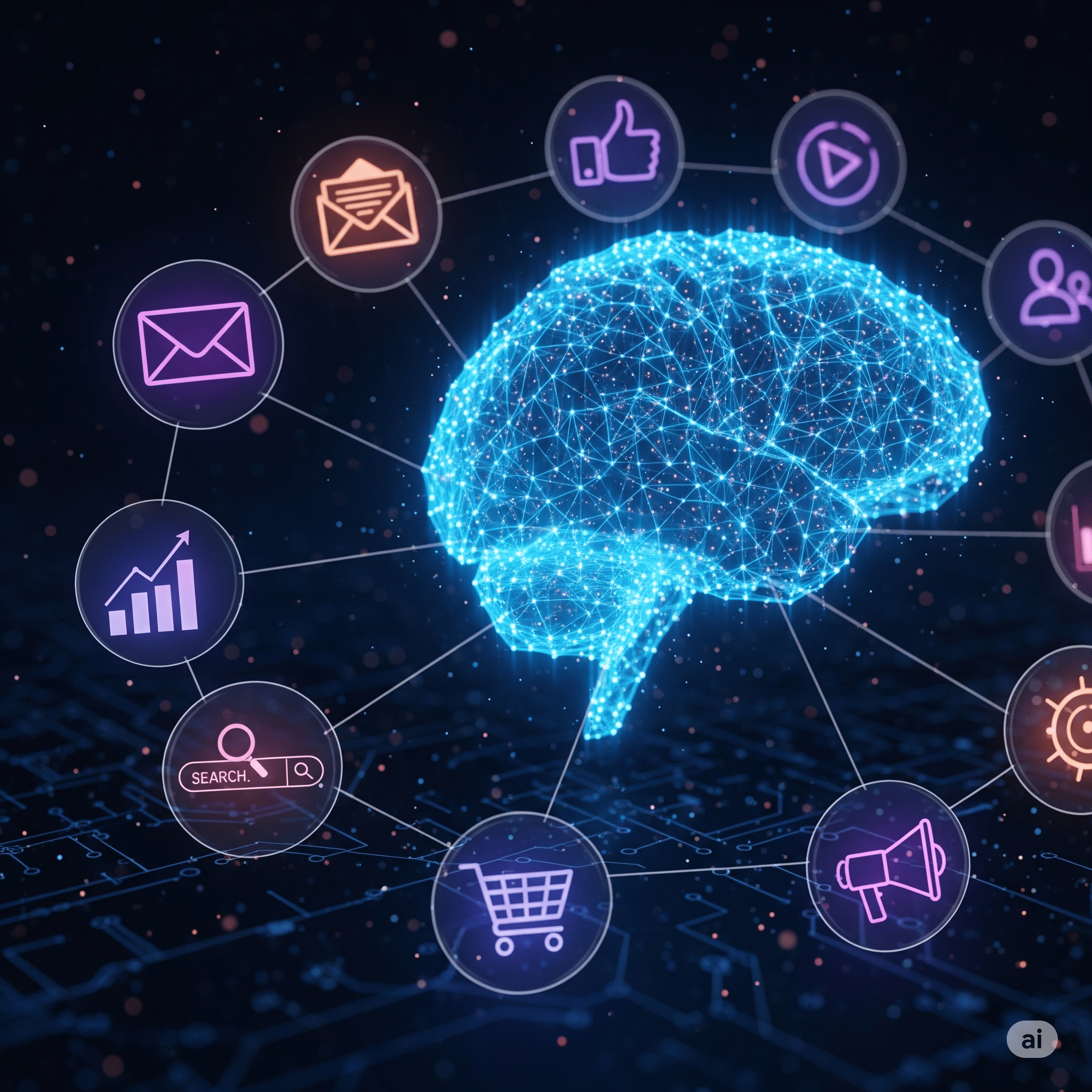
Content is the lifeblood of digital marketing. Yet, creating a consistent stream of high-quality, relevant content that resonates with your audience is a constant challenge. It involves everything from research and planning to creation and distribution. Thankfully, a new wave of technology is changing this workflow forever. “AI content strategy”
Today, savvy marketers are building an AI content strategy. This is more than just using a tool to write a blog post. It’s about using artificial intelligence at every stage of the content lifecycle to make your efforts more efficient, data-driven, and impactful. This guide will walk you through how to use AI to plan, create, and distribute your content like a seasoned pro.
Content Planning with AI: From Guesswork to Data-Driven Decisions
The first step in any successful content strategy is a solid plan. For years, this involved manual keyword research and a bit of guesswork. Now, AI can help you find content gaps and uncover audience insights with speed and accuracy.
Discovering Content Opportunities with AI
AI-powered tools can analyze vast amounts of data from search engines, social media, and competitor websites. This helps you identify what your audience is searching for, what topics are trending, and what content is currently getting the most engagement. By leveraging this data, you can build a solid AI marketing plan that focuses on topics your audience genuinely cares about.
- Keyword & Topic Research: AI can help you find not just keywords but also the “search intent” behind them. This means you can understand whether a person is looking for information, a product to buy, or a solution to a problem.
- Audience Segmentation: AI can analyze behavioral data to identify distinct audience segments. For each segment, the AI can then suggest content topics and formats that are most likely to resonate.
- Competitor Analysis: You can use AI to analyze a competitor’s content and backlink profile. This helps you identify their strengths and weaknesses, allowing you to create an even better piece of content to outrank them.
The AI Content Strategy for Creation and Optimization
Once you have a plan, it’s time to create. The key to a good AI content strategy isn’t just generating a first draft; it’s using AI to streamline the entire creation process and optimize the content for both humans and search engines.
Speeding Up Content Creation and Brainstorming
Generative AI tools are excellent for breaking through creative blocks. Instead of staring at a blank page, you can use AI to:
- Draft Outlines: Provide a topic and a target audience, and AI can generate a detailed outline and structure for your article in seconds.
- Write Initial Drafts: AI can create a rough draft of an article, an email, or a social media post. This gives you a strong starting point, saving you hours of time.
- Repurpose Content: A single blog post can become a series of social media posts, an email newsletter, or an FAQ section for your website. AI helps you adapt and repurpose long-form content for multiple channels with minimal effort.
Optimizing Content with AI
AI’s value in content creation extends beyond writing. It also helps you optimize your content for better performance. For example, AI can analyze top-ranking content for a specific keyword and provide suggestions on the ideal word count, number of headings, and keyword density. This data-driven optimization helps ensure your content is not only engaging but also discoverable.
AI for Content Distribution: Reaching the Right Audience
You’ve planned and created amazing content, but your job isn’t over yet. An effective AI content strategy also uses AI to ensure your content reaches the right people at the right time. This is where AI truly shines, taking the guesswork out of distribution.
Smart Scheduling and Personalization with AI
AI-powered distribution tools can analyze your audience’s behavior to determine the optimal time to post content. They look at historical data to find out when your audience is most active on social media and most likely to open an email. By scheduling your content with AI, you can maximize your reach and engagement. This is a core function of modern AI for content distribution.
AI also enables hyper-personalization in your distribution efforts. For example, a customer engagement platform can use AI to:
- Segment Audiences: It can automatically segment your email list based on a user’s past interactions with your content.
- Personalize Subject Lines: It can A/B test different subject lines to find the one that will have the highest open rate for each individual user.
- Distribute Content: It can automatically send the content to the audience segment that is most likely to engage with it.
Real-World Applications: An AI Marketing Plan in Action
Many companies are already using AI at every stage of their content strategy. Here are a few real-world examples.
Case Study 1: The Washington Post’s AI Bot
The Washington Post has used its own AI content bot, Heliograf, to write short, data-driven articles. The AI bot generated content for the 2016 Olympic Games and U.S. election coverage. The AI was able to turn data into compelling narratives faster than any human journalist could. This freed up their journalists to focus on in-depth, investigative reporting. It’s a perfect example of how AI can scale a content team’s output without sacrificing quality.
Case Study 2: L’Oréal and Consumer Insights
L’Oréal, a global leader in beauty, uses AI to create a data-driven AI marketing plan. They use AI to analyze millions of online conversations and images from social media to identify emerging beauty trends. This process helps them understand what customers are talking about, what they’re struggling with, and what they want from a brand. These insights then inform their entire content strategy, ensuring their social media and marketing campaigns are always relevant and on-trend.
Case Study 3: Netflix’s Recommendation Engine
Netflix is the master of AI for content distribution. Their recommendation engine uses AI to analyze a user’s viewing history, search patterns, and ratings. It then uses this information to suggest new shows and movies with incredible accuracy. The AI’s decisions drive over 80% of the content viewed on the platform. It’s a prime example of how AI can be used to personalize content distribution to increase engagement and customer retention.
Tools and a Practical Workflow for an AI Content Strategy
You don’t need a massive budget to get started with an AI content strategy. Here are a few tools and a simple workflow to help you get started.
- Frase: This tool uses AI to research a topic, create a content outline, and optimize your content for SEO. It analyzes what’s currently ranking on Google for your target keyword and provides actionable suggestions to help you create a better article.
- Jasper: As a top AI writing assistant, Jasper is a great tool for content generation. It helps you draft long-form articles, ad copy, and social media posts while maintaining a consistent brand voice.
- HubSpot: The HubSpot platform has many AI-powered features for an AI marketing plan. Its Content Assistant can help you with content creation, while its marketing automation tools use AI to personalize emails and optimize distribution times.
- Meltwater: This platform uses AI for social listening and audience insights. It helps you monitor brand mentions, track sentiment, and identify trending topics to inform your content planning.
A Beginner’s Workflow for AI Content Strategy
- Plan: Use an AI tool to brainstorm topics and research what’s trending in your niche. Then, create a content calendar.
- Create: Use a generative AI tool to draft a first version of your content. Don’t publish this raw content; instead, use it as a foundation to add your own expertise, unique examples, and brand voice.
- Optimize: Use an AI-powered SEO tool to check your content. Make sure it’s optimized for search engines, has a good readability score, and provides a good user experience.
- Distribute: Use an AI marketing platform to personalize and schedule your social media posts and emails. Use the AI’s data-driven insights to figure out the best time to publish for maximum engagement.
The Future of Marketing Is a Human-AI Partnership
The rise of AI in content strategy is not about replacing human creativity. It’s about empowering it. By adopting a smart AI content strategy, you can automate the mundane tasks that consume so much of your time. This frees you up to focus on what truly matters: building meaningful relationships, telling compelling brand stories, and crafting a unique voice that resonates with your audience.
AI in Paid Ads: The Biggest Shift You’ll See in 2025
The future of marketing is a partnership between human intelligence and artificial intelligence. By using AI to guide your content decisions, scale your output, and optimize your distribution, you can create a marketing engine that is more efficient, more personal, and ultimately more successful. For more insights into how marketers are leveraging AI, a great resource is the HubSpot AI Blog. You can also find valuable research on the impact of AI in business from sources like McKinsey.
AI in Content Marketing: The Ultimate Transformation for 2025
Keyword List: AI content strategy, content planning with AI, AI for content distribution, AI marketing plan, content marketing, digital marketing, AI tools for marketers, generative AI, content creation, content optimization, AI in SEO, content lifecycle