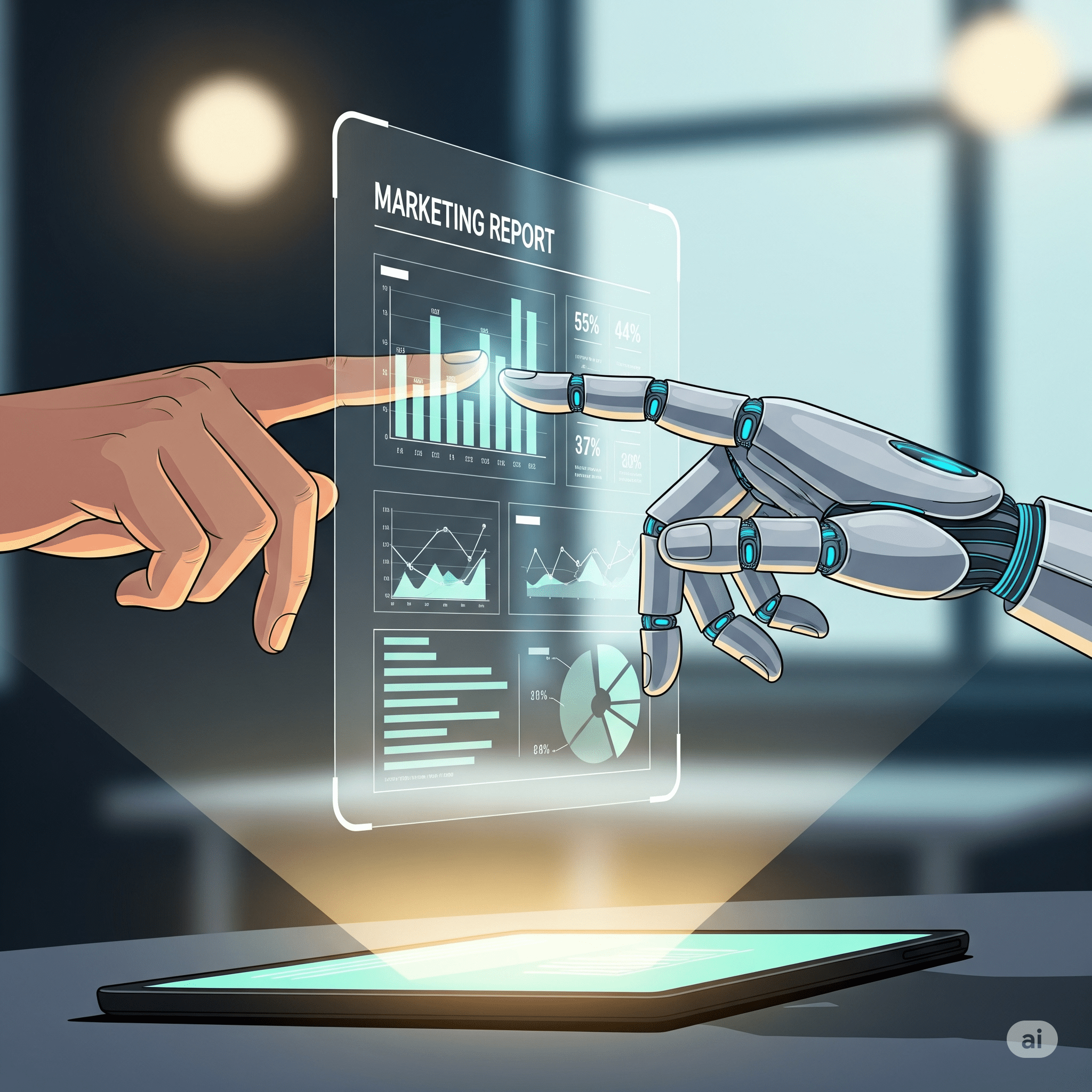
Remember when marketing automation was just about sending a sequence of emails? That was just the beginning. Today, a new era of intelligence has arrived, transforming how marketers work and connect with their audience. The static, rules-based systems of the past are being replaced by dynamic, predictive ones. This powerful evolution is happening right now with the rise of marketing automation tools with AI.
This isn’t about simply automating tasks; it’s about making your entire marketing workflow smarter. By integrating artificial intelligence, you can unlock a new level of efficiency, personalization, and strategic insight. This guide will take a deep dive into the world of AI marketing software, showing you how to go from a reactive, manual-heavy approach to a proactive, data-driven powerhouse. Get ready to discover how to build an intelligent, scalable marketing engine that delivers better results.
The Evolution of Marketing Automation tools with AI
Traditional marketing automation platforms were built on simple logic: if a user does X, then send them Y. This worked for a time, but it was rigid and often missed the nuances of customer behavior. For example, a customer who downloads an e-book might receive a generic follow-up email, regardless of whether they have a history of high-value purchases or not.
Marketing automation tools with AI change this by adding a layer of intelligence and adaptability. Instead of following a simple rule, an AI-powered system can:
- Analyze behavior: It can process vast amounts of customer data in real-time, such as browsing history, in-app actions, and past purchases.
- Predict intent: It can predict which customers are likely to buy, churn, or respond to a specific offer.
- Optimize in real-time: It can make instant adjustments to a campaign, such as changing an email’s subject line or a push notification’s timing, to maximize engagement.
This shift from rigid, rule-based automation to fluid, predictive automation is a game-changer for marketers. It allows you to create highly personalized, one-to-one experiences for thousands of customers simultaneously.
Core Benefits of AI Marketing Software (Marketing Automation tools with AI)
Implementing AI into your marketing automation stack provides clear benefits that can transform your business. From personalizing customer journeys to making data-driven decisions, AI is the secret weapon for modern marketers.
Hyper-Personalization at Scale
Personalization has always been a key to effective marketing. AI takes it to a new level. AI marketing software enables you to create hyper-personalized customer journeys that feel unique to every individual. For example, an AI can dynamically change the content of an email based on a customer’s recent website activity. It can recommend products they’ve shown interest in, offer a discount on an item they’ve left in their cart, and suggest complementary products based on their purchase history. This level of personalization is a major driver of engagement and conversions.
Data-Driven Decision Making
Marketers often spend a huge amount of time pulling data from different platforms and building reports. AI automates this tedious process, but it also goes much deeper. AI-powered analytics can analyze millions of data points in seconds, uncovering trends, anomalies, and insights that a human could never find manually. For instance, AI can tell you exactly which campaigns are driving the most revenue, which customer segments are most profitable, and where you’re losing customers in your funnel. This provides you with the data you need to make smarter, more confident business decisions.
Improved Marketing Efficiency and Productivity
The most immediate benefit of integrating AI is the boost in productivity. AI tools for marketers can take over repetitive, time-consuming tasks. This frees up your team to focus on high-impact, creative work, such as developing new strategies, building relationships with clients, and creating compelling content. This is how you achieve real, measurable efficiency and get more done with the same resources.
Real-World Case Studies of Automation Platforms
The power of AI in marketing is not just a theory; it’s being used by leading companies to drive real results. These case studies show how AI marketing software is transforming businesses.
Case Study 1: Amazon’s AI Recommendation Engine
Amazon’s recommendation engine is a textbook example of AI in action. The platform uses a sophisticated AI to analyze every aspect of a customer’s behavior, including browsing history, past purchases, and search queries. This predictive model allows Amazon to suggest products with incredible accuracy, driving over 35% of its total sales. This is a great example of an automation platform that uses AI to create a hyper-personalized shopping experience that feels unique to every customer.
Case Study 2: HubSpot and Predictive Lead Scoring
HubSpot, a leading marketing and sales platform, uses AI for predictive lead scoring. The platform analyzes a contact’s data and activity—such as email opens, website visits, and form submissions—to predict their likelihood of becoming a customer. This allows sales teams to prioritize their outreach and focus their efforts on the leads that are most likely to convert. This use of marketing automation tools with AI has helped businesses increase lead-to-customer conversion rates and improve sales efficiency.
Case Study 3: The AI-Powered Email Marketing of a Major E-commerce Brand
A major e-commerce brand used AI to optimize its email marketing campaigns. Instead of sending emails at a pre-defined time, the company used AI to find the optimal time for each individual customer. The AI analyzed a customer’s past email open times, and then it used that data to send an email at the exact time they were most likely to open it. The AI also tested different subject lines and email content to find the one that would have the highest open and click-through rate. The result was a significant increase in both open rates and conversions.
Your New Creative Partner is an AI
Essential AI Tools for Marketers (Marketing Automation tools with AI)
You don’t need to be a data scientist to start using AI in your marketing. A growing number of tools and automation platforms are making this technology accessible for all marketers.
- HubSpot Operations Hub: This platform is designed specifically for marketing operations. It uses AI to automate manual tasks, sync data between different tools, and provide AI-powered workflow suggestions to improve your processes.
- Zapier: Known as the “Lego of the tech stack,” Zapier uses AI to help you build automated workflows between thousands of apps. You can create a “zap” that automatically turns a new lead into a task in your project management tool, saving you from manual data entry.
- Jasper: For teams that need to scale content creation, Jasper is a fantastic tool. It uses generative AI to help you draft blog posts, social media updates, and ad copy, which boosts your team’s creative output without adding to their workload.
- Iterable: This platform is a great tool for cross-channel marketing. It uses AI to optimize the timing and content of your push notifications, in-app messages, and email campaigns. Its AI-powered features help you engage users with personalized messages and offers.
A How-To Guide for Getting Started with AI-Powered Automation
Building a stack of marketing automation tools with AI doesn’t have to be overwhelming. You can start small and build up.
- Assess Your Needs: Before you add any new tools, take a hard look at your current workflow. Where are the biggest bottlenecks? What tasks consume the most time? This audit will tell you exactly where you can get the most value from AI.
- Start Small, with a Clear Goal: Don’t try to automate everything at once. Pick one area to focus on, such as content creation or reporting. Start with a single, clear goal, and build from there.
- Choose the Right Tools: Select a tool that fits your specific needs and can integrate with your existing platforms. Look for solutions that offer great analytics and allow you to test and iterate your campaigns.
- Integrate and Test: Once you have a successful workflow, look for other opportunities to integrate AI tools. Always test the results. Run A/B tests to see how your AI-powered process compares to your old way of working.
- Embrace the New Mindset: The biggest challenge of AI is not the technology; it’s the cultural shift. Encourage your team to view AI as a collaborator, not a threat. Give them time and resources to learn new skills and experiment with AI tools.
The Future is Now: A Human-AI Partnership (Marketing Automation tools with AI)
The future of marketing is lean, agile, and smart. It’s a future where your team isn’t bogged down by administrative tasks but instead focuses on strategic thinking and creativity. By embracing marketing automation tools with AI, you’re not just adopting a new tool; you’re building a new way of working. You can make smarter, faster decisions and create more impactful campaigns, all while improving your team’s overall well-being and satisfaction. For more insights on how AI is shaping the business world, you can refer to the McKinsey Technology Trends Outlook or the HubSpot AI for Marketing Course.
AI Design Thinking Just Got a Superpower
Keyword List: marketing automation tools with AI, AI marketing software, automation platforms, AI tools for marketers, marketing automation, AI for marketers, generative AI, MarTech, predictive analytics, lead scoring, personalization