The conversation around AI is everywhere. We see amazing new tools and hear about how they are changing our world. However, for many young people, this conversation is not just about cool new tech. It’s about their future. Is AI and unemployment a real threat? Will robots take all the jobs? These are not small questions, and for many in Gen Z, the answer seems to be yes. In fact, a recent poll found that 71% of Americans believe AI will cause “too many people to be permanently unemployed.” AI Job Market Predictions
The truth is, the picture is more complex than a simple “AI is bad for jobs.” It is true that AI is changing the job market in a big way. But the real story is about a shift, not an elimination. This article will break down what the latest data says about the AI job market predictions. We’ll also explore why certain jobs are at risk. And most importantly, we will give you a guide on what you can do to prepare for the new world of work. By the end, you’ll see why a fear of AI is normal but a fear of not adapting is the real risk.
The Future of AI and Jobs: A Tale of Two Workers
When we talk about the future of AI and jobs, we need to talk about two very different types of work: augmentation and automation.
- Automation: This is when AI takes over a repetitive, predictable task that a human used to do. For example, a data entry job might be completely automated by AI. The AI can do this work faster and with fewer errors. These jobs, which are often entry-level, are the most at risk.
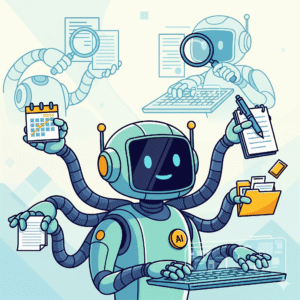
- Augmentation: This is when AI helps a person do their job better. For example, a writer can use AI to write a first draft of an article. The AI saves the writer time. The writer then adds their own personal touch and creativity. In this case, the AI makes the human more productive, not obsolete.
A recent study by Stanford University found that since the rise of tools like ChatGPT, employment among early-career workers in jobs most exposed to AI has declined by 13%. In contrast, older, more experienced workers in the same jobs saw their employment remain stable or even grow. This suggests that AI is replacing some entry-level tasks, which is creating a “pipeline paradox” where young workers are finding it harder to get a foot in the door.
Gen Z AI Concerns: The Impact on Early-Career Jobs
Gen Z is right to be worried. Their anxiety is not unfounded. The jobs most at risk for automation are often the same ones that young people use to start their careers. This includes jobs in:
- Software Development: AI can write simple code, which used to be a common task for junior developers.
- Customer Service: Chatbots can answer a lot of common questions, which used to be a big part of entry-level customer service jobs.
- Content Creation: AI can write first drafts and create simple images, which can affect jobs for entry-level writers and designers.
- Accounting: AI can automate a lot of data entry and financial reporting, which is often a big part of entry-level accounting jobs.
This is a big problem. It’s not just about losing a job. It’s about losing a pathway to a career. In the past, young people would start at the bottom and work their way up. They would learn skills and gain experience. Now, AI is threatening to remove that first step of the ladder. This creates a huge challenge for society. This is the heart of Gen Z AI concerns.
The AI Job Market Predictions: What the Data Says (AI Job Market Predictions)
When we look at the numbers, we see a story of big change. But we also see a story of great opportunity.
- Job Growth: A PwC report found that jobs that require AI skills are growing faster than all other jobs. The report also found that jobs in industries most exposed to AI are seeing a wage premium. This shows that if you learn to work with AI, you will be more valuable.
- Wage Premium: According to the same PwC report, workers with AI skills earn on average 56% more than their peers in the same roles without those skills. This is a huge jump from just 25% the year before. This is a clear sign that AI skills are very valuable.
- New Jobs: While some jobs are being lost, new jobs are being created. These new jobs are all about working with AI. They include jobs like “AI Ethics Officer,” “AI Trainer,” and “AI Architect.” These jobs didn’t even exist a few years ago.
The overall message from these AI job market predictions is clear. The job market is changing. But it’s not disappearing. It’s shifting toward jobs that require collaboration with AI.
Why AI is replacing some jobs faster than others
What to Do Now: Your Guide to AI Upskilling
The best way to prepare for the future of AI and jobs is to start learning now. The good news is, you don’t need to go back to school to learn AI. There are a lot of great resources online that can help you. You just need to have a plan.
The Generative AI Job Market: 2025 Data Insights
- Identify Your Skills: Think about what you are good at. Are you a good communicator? Are you a creative problem-solver? These are the skills that AI cannot do. These are the skills that will be most valuable in the future.
- Learn to Work with AI: Start using AI in your daily life. Use it to help you write an email. Use it to help you brainstorm. The more you use it, the more comfortable you will get. This is the first step in AI upskilling.
- Find a New Career Path: If your job is at high risk of automation, you might want to start thinking about a new career. The PwC report found that jobs in healthcare are less exposed to AI. Jobs in trades also require a lot of hands-on work that AI cannot do. These are great career paths to consider.
- Embrace Lifelong Learning: The world is changing very quickly. The skills that are important today might not be important in a few years. You must always be learning and adapting. This is the key to a long and successful career in the age of AI.
Conclusion: The Future is a Partnership, Not a Competition (AI Job Market Predictions)
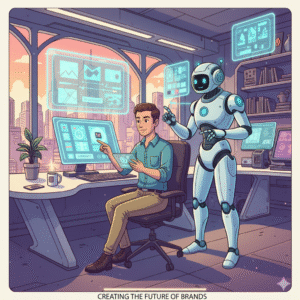
Is AI and unemployment a real threat? Yes, but only for those who refuse to adapt. The AI job market predictions show a future that is not about robots vs. humans. It is about a partnership. The AI handles the mundane tasks. The human handles the creative, emotional, and strategic parts of the job.
AI for Candidate Sourcing: The Future of Hiring
The future is bright for those who are willing to learn and adapt. The key is to see AI for what it is: a powerful new tool. It is not a monster that is coming to take your job. Instead, it is a partner that is here to help you be more productive, more creative, and more valuable. By embracing this technology, Gen Z can shape their own future and build a world of work that is better for everyone.