Imagine your company’s supply chain is like a giant, winding road. It starts where you get your materials. It ends when your product gets to your customer. For a long time, managing this road was a lot of hard work. It was full of guesswork. You had to guess how much product to make. You also had to guess what was the best route for delivery. These guesses were often wrong. They could lead to a lot of wasted time and money. But today, a new kind of technology is changing everything. AI in supply chain management is like a super-smart GPS for your business. It tells you the best route. It also tells you what problems might be up ahead.
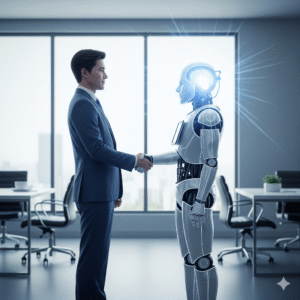
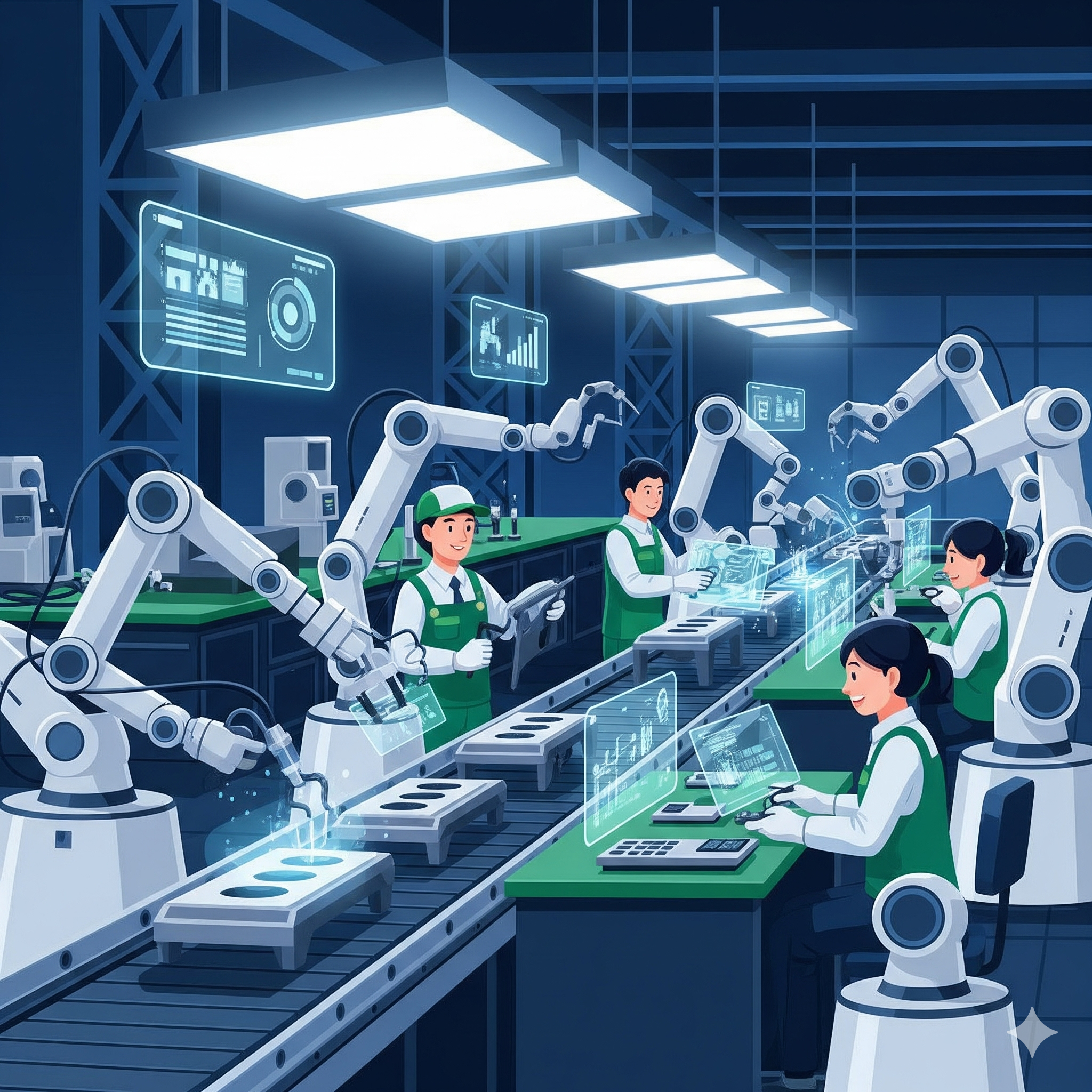
AI is not here to replace people. Instead, it’s here to make them smarter and faster. It handles all the boring, repetitive tasks. This frees up your human team to focus on what they do best: thinking, planning, and solving big, complex problems. This article is your guide to understanding AI automation. We will break down how it works. We’ll also show you how real businesses are using it to get ahead. You will also get some simple tips to start using it yourself. By the end, you’ll see why a smart approach to AI is the key to cutting costs and boosting efficiency. (AI in supply chain management)
Logistics Automation AI: The Smart Route to Efficiency (AI in supply chain management)
Getting a product from point A to point B can be a very complex process. You have to think about a lot of different things. This includes traffic, weather, and the cost of fuel. In the past, a person would have to manually plan the best route. This was very time-consuming. It was also easy to make a mistake. But today, a new kind of technology is changing this. Logistics automation AI is making the process much faster and more accurate.
Here is how AI helps with automating logistics:
- Smart Route Planning: An AI can look at a lot of different data. It can look at real-time traffic, weather, and road conditions. It then finds the best route for a delivery truck. This helps a company save a lot of money on fuel. It also helps a company get a product to a customer faster.
- Predictive Maintenance: A delivery truck can break down. This can cause a big problem for a company. An AI can look at data from a truck. It can then predict if it is going to break down soon. This helps a company fix the problem before it happens. This is a great way to save a lot of money and avoid delays.
- Automated Tracking: A company needs to know where its products are at all times. An AI can automatically track all the products in the supply chain. This helps a company give its customers a real-time update on their order. It also helps a company know if there are any problems with a delivery.
This is a great example of how AI can have a huge impact on a business. It makes the logistics process much more efficient.
Inventory Optimization AI: Predicting What You Need (AI in supply chain management)
A business has to have the right amount of product in stock. If it has too much, it wastes money. If it has too little, it loses out on sales. This is a very difficult problem to solve. It is often a lot of guesswork. But now, with inventory optimization AI, that is all changing. It is like having a super-smart pantry that knows when you are running out of milk. It can tell you exactly when to buy more.
Here is how AI helps with inventory optimization:
- Demand Forecasting: An AI can look at a lot of different data. It can look at sales data from the past. It can also look at weather, holidays, and social media trends. It then predicts how much of a product people will buy. This helps a company make sure that it has the right amount of product in stock.
- Automated Ordering: When a product is running low, an AI can automatically place an order for more. This is a great way to save time. It also prevents a company from running out of a popular product.
- Smart Warehousing: AI can help you organize your warehouse. It can tell you where to put products. It can also tell you the best route for a person to pick a product. This makes the warehouse much more efficient.
- Waste Reduction: An AI can help you with waste reduction. It can predict when a product is going to expire. It can then tell you to sell that product at a discount. This is a great way to save money and reduce waste.
This is a great example of how AI can have a huge impact on a business. It helps a company save money and be more profitable.
AI for Supply Chain: Real-World Case Studies
Many of the world’s most successful companies are using AI to get ahead. These real-world examples prove that AI in supply chain management is not just a theory; it’s a powerful tool.
Case Study 1: Unilever’s AI-Powered Supply Chain Unilever, the company that makes Ben & Jerry’s ice cream, was struggling with a high volume of demand. The demand for ice cream changes with the weather. It was hard for them to know how much ice cream to make. They started using an AI to help them. The AI looks at weather data and sales data. It then predicts how much ice cream people will buy. This has helped them save a lot of money and reduce waste. It has also helped them make sure that their most popular products are always in stock. This is a great example of automating finance processes.
Case Study 2: Geotab’s Smart Fleet Management Geotab is a global leader in telematics. They use AI to analyze billions of data points from over 4.6 million vehicles. The AI looks at a lot of different data. It looks at a driver’s behavior. It also looks at a truck’s performance. Also, It then uses this information to give a business real-time insights into its fleet. This helps a business save money on fuel. It also helps a business get a product to a customer faster. This is a great example of logistics automation AI.
Case Study 3: The Manufacturing Company’s Predictive Maintenance A manufacturing company had a big problem. Their machines would often break down. This would cause a lot of delays and cost them a lot of money. They decided to use an AI to help them. The AI looks at data from the machines. It then predicts if a machine is going to break down soon. This helps the company fix the problem before it happens. This has helped the company save a lot of money. It has also helped them be more efficient.
Top AI Tools for Your Supply Chain
You do not have to be a big company to use AI. There are a lot of great tools out there for businesses of all sizes. Here are a few to get you started.
- Kinaxis: This tool is great for a company that wants to plan its supply chain. It helps you with things like scenario modeling, planning, and operations management. It is a great tool for any business that wants to be more efficient.
- FlowForma: This tool helps you automate your business processes. It can help you with things like onboarding new employees and processing invoices. It is a great tool for any business that wants to be more efficient. See source.
- Prewave: This tool is a great tool for a company that wants to manage risks. It uses AI to monitor news and social media. It can then tell you if there are any problems with your supply chain. This helps you catch problems before they happen.
- Kore.ai: This tool is great for a company that wants to use AI. It provides an intelligent automation and conversational AI platform. It helps businesses with hiring, onboarding, and more.
These tools are at the forefront of AI for supply chain. They are a great way to get started with AI.
Conclusion: The Future of the Supply Chain is a Partnership (AI in supply chain management)
The future of the supply chain is not about AI replacing people. It is about AI and people working together. The AI handles the mundane tasks. The human handles the creative, emotional, and strategic parts of the job. This is the new reality of the business world.
Pitfalls of AI in Marketing: What You Must Watch Out For
A PwC report states that AI has the potential to lift global GDP by up to 15% over the next decade. See source. This is a huge change. But that outcome depends on trust and a great plan. The businesses that embrace AI in a smart way will be the ones that succeed. They will be more productive. They will also be more profitable. Also, They will also be a great place for people to work. (AI in supply chain management)