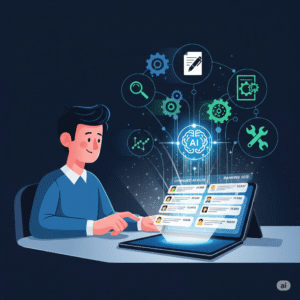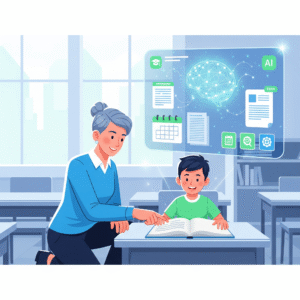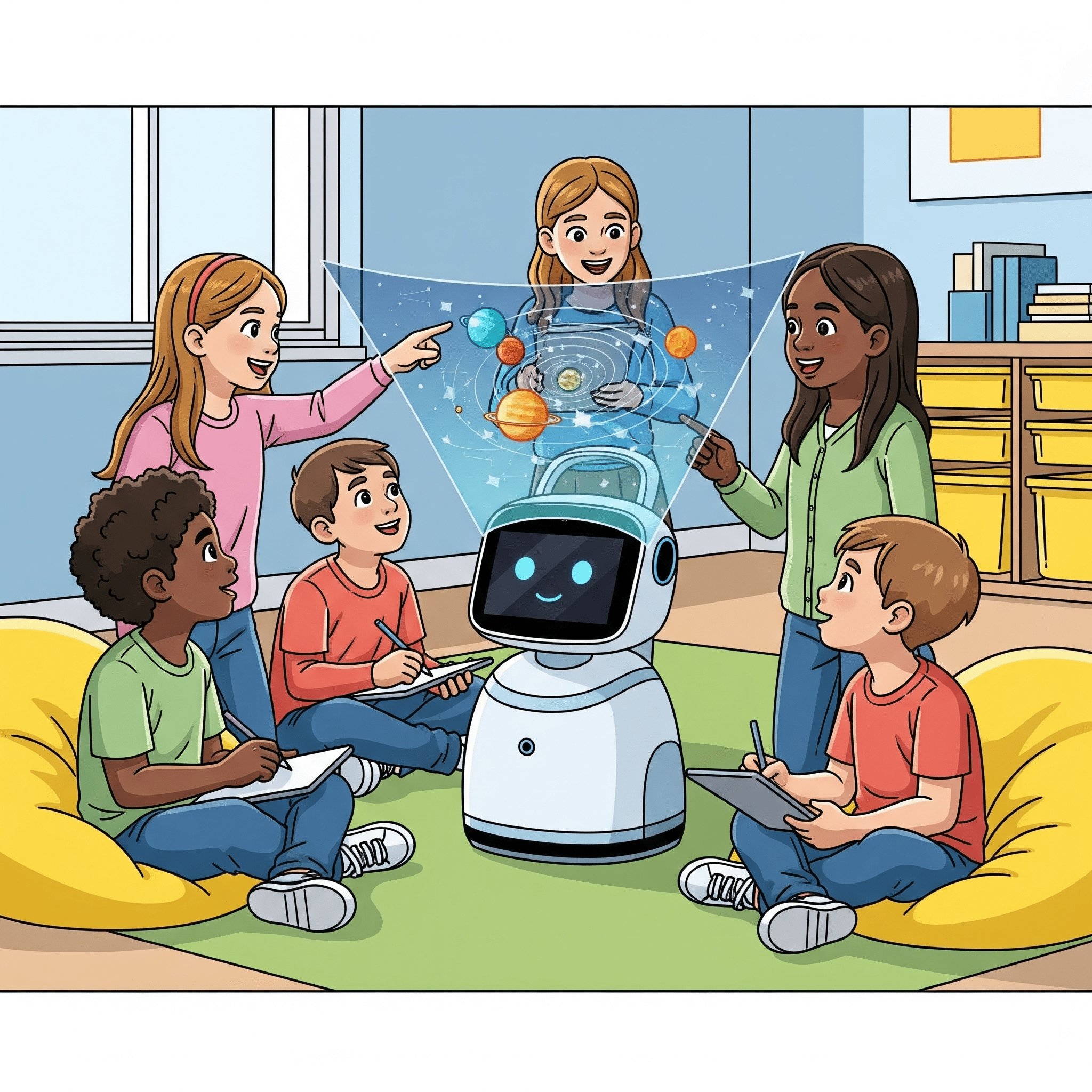
Teaching is one of the most important and challenging jobs in the world. Imagine a classroom full of students. Each student has their own unique way of learning. Some students learn very quickly. Others need more time. Some are visual learners. Others learn by listening. In the past, it was almost impossible for one teacher to meet the needs of every single student. This is the core challenge of “differentiated instruction.” It’s about teaching in a way that is perfect for each person. But today, a powerful new tool is changing everything. AI for differentiated instruction is like giving every student a personal tutor.
AI is not here to replace teachers. Instead, it’s here to be a partner. It handles all the boring, repetitive parts of the job. This frees up teachers to focus on what they do best: inspiring, mentoring, and connecting with students. This article is your guide to using AI in your classroom. We’ll explore how AI helps at every stage. We’ll also look at how real schools and companies are using these tools. By the end, you’ll see why a smart approach to AI is the key to creating a better learning experience for every student. (AI for differentiated instruction)
Personalized Learning AI: How It Works (AI for differentiated instruction)
Every student learns differently. And for a long time, education was a one-size-fits-all model. Every student in a class learned the same thing at the same time. This was very difficult for students who learned at a different pace. But now, with personalized learning AI, that is all changing. The AI acts like a smart sidekick that watches how you learn and figures out what you need. It then gives you a unique lesson plan. It’s like a personal trainer for your brain.
How does this work? The AI uses smart software to watch how you learn. It can see when you are struggling with a topic. also, It can also see when you are a master of a topic. It then uses this information to help you.
Here are some ways the AI helps:
- It adjusts the speed: If you are learning a topic quickly, the AI will give you more difficult work. If you are struggling, it will slow down and give you easier work. This ensures you are always learning at the right pace.
- It offers different ways to learn: If you are a visual learner, the AI might give you more videos and images. If you are a reader, it might give you more articles. The AI finds the best way for you to learn.
- It provides instant help: When you get a question wrong, the AI can instantly explain why. It can also give you hints. This helps you learn from your mistakes right away.
This is a powerful change. A study by the London School of Science & Technology showed that students who used AI-driven systems improved their test scores by 62%. That’s a huge improvement.
AI for Special Needs Students: Making Learning Accessible
In a classroom, some students have special needs. It can be hard for them to keep up with the other students. It can also be hard for them to get the support they need. This is where AI for special needs students can be a great help. The AI can make learning more accessible and inclusive for every student. (AI for differentiated instruction)
Here are some of the ways AI helps students with special needs:
- Text-to-Speech: Some students have a hard time reading. An AI can read a long article or a document for them. This helps them get the information they need without having to struggle with reading.
- Visual Aids: Some students are visual learners. An AI can take a long article and create a lot of images for it. This helps a student understand the topic better.
- Personalized Quizzes: An AI can create a quiz with questions that are just right for a student’s reading level. This helps a student feel more confident and less frustrated.
- Language Translation: A student who speaks a different language might have a hard time understanding the teacher. An AI can translate a document or a conversation for them. This helps them feel more included in the classroom.
These are just a few of the many ways AI in the classroom is making a big impact on accessibility and inclusion.
AI for Lesson Prep: Your Super-Fast Assistant (AI for differentiated instruction)
Creating a great lesson plan is a lot of work. You have to decide what you are going to teach. You also have to think of new ways to make it fun for students. It can take a lot of hours. But now, with AI for lesson prep, that is all changing. AI is acting like a super-fast research assistant that helps you create lessons in minutes, not hours.
Here is how AI helps with lesson prep:
- Generating Lesson Plans: You can give an AI a simple prompt like, “Create a lesson plan for a 5th-grade science class on the solar system.” The AI will then create a full lesson plan for you. It will also suggest activities and projects. This gives you a great starting point. You can then add your own personal touch to it.
- Creating Quizzes: Quizzes and tests are a great way to see if students are learning. But creating them can be a lot of work. An AI can create a quiz for you instantly. You can give it a text and it will create a few questions for you. This saves a lot of time.
- Differentiating Content: An AI can take a long article and change it into a simpler version for students who need more help. It can also create a more challenging version for students who are ready for it. This helps you give every student the perfect learning experience.
- Finding New Ideas: Stuck in a rut? The AI can brainstorm new project ideas or fun activities to make your lessons more exciting. It can suggest new ways to teach a topic. This helps you be more creative in the classroom.
These are just a few of the many ways AI in education is making a big impact. (AI for differentiated instruction)
Real-World Benefits of AI in the Classroom
It’s one thing to talk about the benefits of AI. It’s another to see them in action. These real-world examples show how a smart approach to AI can lead to great results.
Case Study 1: The Teacher’s Time-Saving “AI Dividend” (AI for differentiated instruction)
A recent report by the Gallup Organization found that teachers who use AI tools regularly, even just once a week, save an estimated 5.9 hours per week. The report calls this an “AI dividend.” The teachers said they used that time to give more personalized feedback to students, create more individualized lessons, and even get home earlier to spend time with their own families. This finding proves that the time-saving power of AI is not just a theory; it’s a real benefit that is helping teachers avoid burnout and live a more balanced life.
Case Study 2: Khan Academy’s Khanmigo
Khan Academy, a well-known name in education, has created an AI assistant called Khanmigo. It is a tool for both students and teachers. For teachers, it can act as a personal assistant. It can create lesson plans and rubrics. It can even write first drafts of emails to parents. This is a great example of an AI in education tool that is making life easier for both students and teachers. For students, it can act as a personal tutor. It helps them with their homework. It can also help them with their studying.
Case Study 3: The UAE’s National AI Curriculum
The United Arab Emirates has created a national AI curriculum for all public schools. The curriculum teaches students how to use AI responsibly and ethically. The program also trains teachers to lead the subject. This is a great example of a country taking the challenge of AI seriously. It shows a commitment to preparing students for the future. The program also helps teachers with their workload. It frees them up to focus on teaching. (AI for differentiated instruction)
Top AI Tools for Your Classroom
The world of AI is growing fast. There are a lot of great tools out there. Many of them have a free version. This means you can try them out without spending any money.
- MagicSchool AI: This is a very popular all-in-one tool for teachers. You can use it to create lesson plans, generate quizzes, write emails to parents, and even create different versions of a text to match different reading levels.
- Khanmigo: This tool from Khan Academy is an AI assistant for students and teachers. It helps with personalized learning, lesson planning, and more. It is a great way to get started with AI.
- Gradescope: This tool helps teachers with grading. It uses AI to grade assignments and give feedback. This saves teachers a lot of time. It also gives students instant feedback.
- Diffit: This tool is designed to help teachers differentiate instruction. You can take any article or text and have Diffit change it into a simpler version for different grade levels. It also creates summaries, questions, and vocabulary lists automatically.
These tools are at the forefront of teacher productivity AI. They can help you take your classroom to the next level.
Conclusion: The Future of Teaching is Human-Powered (AI for differentiated instruction)
The rise of AI in education is a huge moment for teachers. Some people worry that AI will make teachers obsolete. However, a report from McKinsey & Company states that this is not the case. They say that the things that make a teacher great—like inspiring students, building relationships, and empathy—are the very things that AI cannot do.
AI Job Market Predictions: Is Gen Z Right to Fear Unemployment?
The future of education is a partnership between humans and AI. The AI handles the data and the dynamic lessons. The human handles the creative, emotional, and strategic parts of the job. The AI can be a tutor. The teacher can be a mentor. This is the future of education. By embracing these new tools, we can create a world where every student has a personal learning sidekick. And where every teacher has a great assistant to help them with their work. (AI for differentiated instruction)