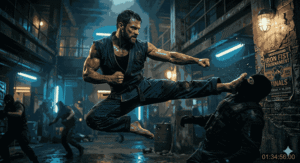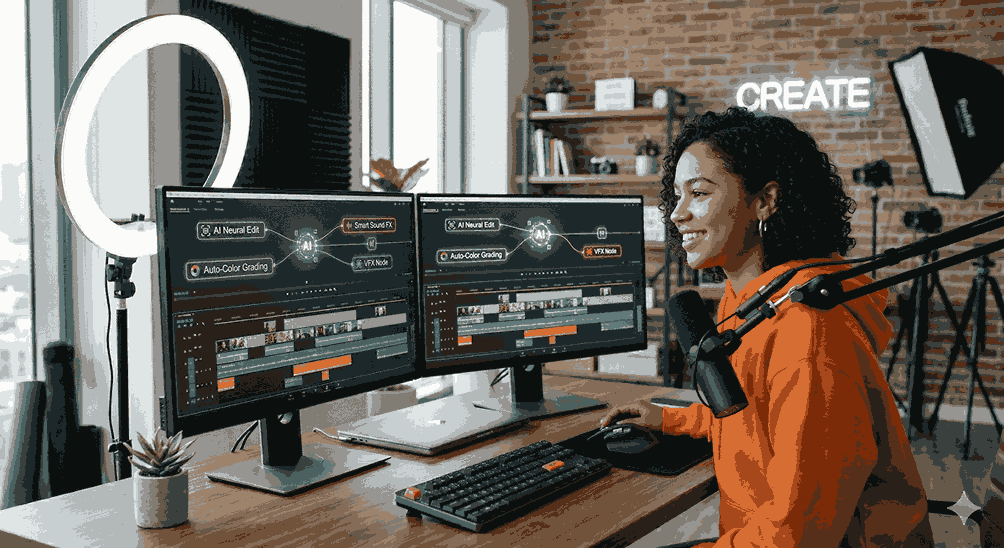
Over 70 billion daily views. According to an official update from the YouTube Blog, that is the staggering number of eyeballs glued to short-form video on their platform every single day. However, behind that massive golden opportunity lies a brutal reality for creators: the agonizing editing treadmill. Trimming clips, adding dynamic text, and hunting for trending audio can quickly consume your entire weekend. Consequently, nearly 90% of new creators burn out before ever tasting real momentum.
Enter the era of youtube shorts ai. If you are exhausted by the daily grind of manual editing, you are in exactly the right place. Specifically, this technology acts as a massive leverage point, allowing you to produce highly engaging videos in a fraction of the time. By the end of this guide, you will understand exactly how to implement automated video creation, which specific tools actually work, and how to scale your channel without sacrificing your unique creative voice.
The Rise of AI Tools for YouTube Shorts
To fully grasp what is happening in the creator economy, we must redefine how we look at video production. Think of artificial intelligence not as a robotic director, but rather as your highly efficient digital sous-chef. If you were running a high-end restaurant, you would not spend hours chopping onions yourself; you would hire an assistant to prep the ingredients so you could focus on the final flavor.
AI tools for youtube shorts serve this exact preparatory function. Instead of manually searching for silent pauses in your audio track and meticulously cutting them out, software now does it instantly. Furthermore, this shift is incredibly necessary. The modern youtube algorithm explicitly rewards high-frequency posting combined with intense viewer retention. Therefore, relying entirely on slow, manual video editing is mathematically working against your own success. Implementing smart technology allows a solo shorts creator to output the volume of a three-person production team. Next, we will pull back the curtain and examine exactly how these algorithms process your content.
How YouTube Shorts AI Actually Works Under the Hood
The underlying mechanics of this digital transition are fascinating. We are currently witnessing a total evolution in how short-form video is conceptualized, built, and distributed. To truly leverage youtube shorts ai, you must understand its core components. Here is exactly how modern AI video editing software operates behind the scenes:
- Intelligent Script Generation: Advanced language models analyze current trending topics and structure a script mathematically designed to hook attention within the first three seconds.
- Contextual B-Roll Sourcing: Rather than you endlessly searching stock websites, AI instantly reads your script and pulls highly relevant background visuals to match the emotional tone of your words.
- Dynamic Auto-Captioning: Software precisely maps spoken words to on-screen text, automatically highlighting keywords in vibrant colors to keep the viewer’s eye moving.
- Predictive Audio Mixing: The tools automatically balance your voiceover against background music, perfectly ducking the track whenever you speak so clarity is never lost.
How does the youtube shorts algorithm work with AI content?
A massive misconception is that the algorithm actively penalizes AI-generated videos. In reality, the algorithm is entirely format-agnostic; it strictly cares about viewer satisfaction. If you are using ai to generate youtube shorts that keep people watching until the final second, YouTube will push that content aggressively. Conversely, if your AI video is boring, robotic, and lacks a human hook, it will fail. The algorithm simply measures watch time, loop rate, and engagement. Therefore, AI is merely the vehicle; your core idea remains the actual fuel.
Real-World Triumphs: Automated Video Creation in Action
Let’s ground this theory in tangible reality. How are actual creators wielding this technology today? Consider the massive rise of “faceless” historical channels. One notable creator utilized generative tools to produce one-minute stories about obscure Roman emperors. By feeding historical data into an AI scriptwriter and pairing it with AI-generated voiceovers and archival images, they scaled to 100,000 subscribers in four months.
Additionally, consider the traditional long-form podcaster. A recent state of marketing report from HubSpot indicated that short-form video offers the highest ROI of any social media strategy. Knowing this, a popular business podcaster began using a youtube shorts ai clipping tool. Instead of manually scrubbing through a two-hour interview to find the best moments, the software automatically identified the most engaging soundbites based on vocal energy and instantly formatted them vertically. As a result, the podcaster tripled their weekly upload frequency without spending a single extra minute editing, leading to a 40% spike in overall audience reach.
Step-by-Step Guide to AI YouTube Shorts Creation
You cannot stop the tidal wave of video automation, but you can definitely learn to surf it. Adopting youtube shorts automation requires a proactive, structured approach. Here is a clear, highly actionable workflow to begin generating viral-worthy content today.
- First, nail the concept with AI. Open ChatGPT or Claude and prompt it to generate five counter-intuitive hooks related to your niche. Select the boldest one.
- Next, generate a high-retention script. Ask the AI to expand that hook into a 150-word script, strictly formatted with short, punchy sentences.
- Then, secure your voiceover. If you do not want to speak, feed the script into a premium voice cloning tool. Ensure you select a voice model that sounds conversational, not robotic.
- After that, assemble the visual timeline. Drop your audio into an AI video generator that auto-populates relevant stock footage or animations corresponding to your script’s keywords.
- Finally, apply dynamic captions. Use an auto-captioning feature to plaster the words on screen in a bold, readable font. Review the spelling meticulously before hitting export.
Best practices for using ai to generate youtube shorts quickly
To truly master this workflow, you must implement the “human-in-the-loop” strategy. Never blindly publish the very first draft an AI produces. Specifically, spend five minutes manually adjusting the pacing of your captions to ensure they snap perfectly onto the beat of the music. Furthermore, replace at least one or two AI-selected stock clips with a unique meme or a personal reaction shot. This tiny injection of human humor is exactly what differentiates a viral masterpiece from generic internet spam.
The Best AI Tools for YouTube Shorts Creation
Building a curated, reliable tech stack is absolutely critical for your channel’s survival. Out of hundreds of software options on the market, here are the industry-leading platforms currently dominating the space:
- Opus Clip: This is the undisputed king of repurposing. You paste a link to a long-form YouTube video, and it uses AI to slice it into a dozen viral shorts, automatically adding captions and predicting a viral score for each clip.
- ElevenLabs: When it comes to audio, this platform provides the most hyper-realistic text-to-speech generation available. It allows you to clone your own voice or use incredibly emotive, human-sounding avatars, completely removing the “robot” stigma.
- CapCut (Desktop): While technically a standard editor, its built-in AI features are astonishing. From seamless background removal to auto-captions and AI color grading, it is the ultimate all-in-one tool for a shorts creator.
- InVideo AI: This platform excels at text-to-video generation. You simply type a prompt like “Make a short about space travel,” and it writes the script, sources the b-roll, and adds the voiceover in under three minutes.
Avoiding the Trap of “Lazy” YouTube Shorts Automation
When discussing any new technology, dangerous myths frequently cloud the conversation. Let’s decisively dismantle these misconceptions so you can build a sustainable, long-term channel strategy.
Myth: AI means you can do absolutely zero work. Reality: If you put zero effort into your prompts, you will get zero views on your videos. AI handles the heavy lifting of editing, but you must still provide the creative direction, the unique angle, and the overarching viral shorts strategy. Lazy inputs always yield boring outputs.
Myth: Viewers do not care if the voice sounds like a robot. Reality: Modern audiences are incredibly hyper-aware of cheap, robotic voices and will swipe past them in milliseconds. Consequently, investing in high-quality, emotive audio tools is non-negotiable if you want to retain attention.
Myth: You should just spam twenty AI videos a day to grow. Reality: The algorithm heavily favors quality over mindless quantity. Posting three highly polished, well-crafted AI-assisted videos a week will dramatically outperform spamming the platform with low-effort garbage. Focus intensely on viewer retention, not just upload volume.
FAQ Section — youtube shorts ai Questions Answered
How to make youtube shorts with ai from start to finish?
Start by using ChatGPT to brainstorm a hook and write a concise, 150-word script. Next, generate the audio using a realistic text-to-speech tool like ElevenLabs. Finally, import that audio into an editor like CapCut or InVideo, where AI will automatically source matching background footage and overlay dynamic text captions.
Can you monetize ai youtube shorts?
Yes, absolutely. The YouTube Partner Program does not ban AI content, provided it meets their overarching quality and originality guidelines. However, if your content is highly repetitive, lacks educational or entertainment value, or uses stolen assets, it will be flagged for “reused content” and demonetized.
Will the platform eventually ban AI-generated content?
No, YouTube is actively embracing it. In fact, they are building their own generative tools directly into the YouTube Studio app. They simply require creators to responsibly disclose when highly realistic, synthetic media is used to portray events that never actually happened, ensuring viewer transparency.
What are the best ai video generators for youtube shorts right now?
For repurposing long podcasts or interviews, Opus Clip is currently unmatched in the industry. Meanwhile, if you are building videos entirely from scratch using text prompts, InVideo AI and Fliki provide the fastest, most reliable workflows for solo creators.
Conclusion
Navigating the rapid explosion of the creator economy does not require you to sacrifice your sanity to a video editing timeline. Instead, it strictly requires a willingness to adapt and evolve your production methods. Using youtube shorts ai effectively strips away the tedious, repetitive tasks that historically cause massive creator burnout. Consequently, it frees up your mental energy to focus on what actually matters: storytelling, audience connection, and brilliant ideation.
Therefore, do not look at these platforms as a shortcut to cheat the system. Treat them as your ultimate creative partners. The future of short-form video undoubtedly belongs to those who blend artificial efficiency with human authenticity. I strongly urge you to pick just one of the tools mentioned above, generate a test video this weekend, and watch your creative limitations completely disappear.
pubg global championship 2025: The Battle for the Golden Pan