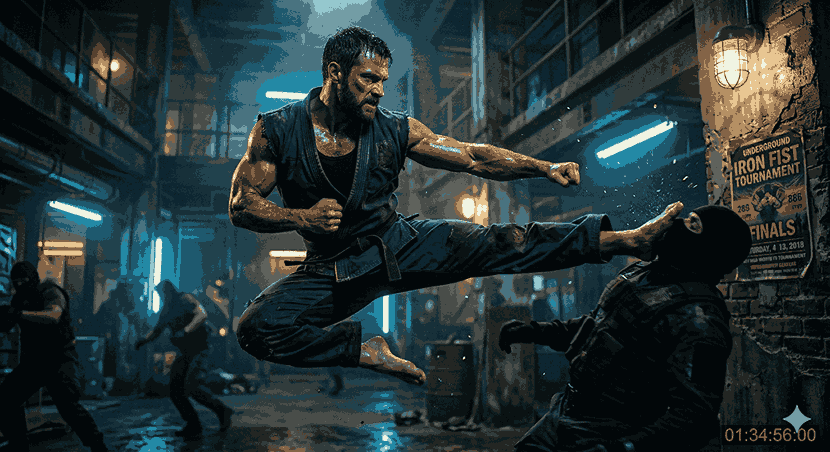
In 1982, a young European martial artist arrived in Los Angeles with exactly $8,000, zero industry connections, and barely any English vocabulary. He slept in rental cars and delivered pizzas just to survive his first few months. However, within a single decade, this completely unknown immigrant transformed into a global box office titan. The jean claude van dam phenomenon absolutely did not happen by random accident. Specifically, it was engineered through a ruthless combination of elite physical discipline and undeniable on-screen charisma.
If you are struggling to carve out your own unique path in a crowded, highly competitive industry, his trajectory offers a brilliant masterclass in sheer perseverance. Many view him simply as a nostalgic pop-culture figure, but that completely undermines his actual artistic influence. By the end of this deep exploration, you will uncover exactly how his unique physical talents reshaped Hollywood choreography and what modern professionals can genuinely learn from his intense dedication.
The Rise of a Uniquely Graceful Martial Arts Actor
Let us strip away the glossy Hollywood glamour for a moment to analyze the historical context. To truly understand the massive cultural weight of jean claude van dam, you must critically examine his roots. Think of the 1980s cinematic landscape as a heavy, blunt instrument entirely dominated by massive bodybuilders like Arnold Schwarzenegger and Sylvester Stallone. In stark contrast, Van Damme introduced the precise, elegant cut of a scalpel. He seamlessly blended the aggressive velocity of kickboxing with the fluid, calculated mechanics of classical ballet.
If a professional modern dancer and a hardened street fighter had to collaboratively design a cinematic combat system, it would look exactly like his. Consequently, this unique hybrid approach made his action sequences feel incredibly rhythmic and visually stunning. He actively proved that a leading action star could be both brutally powerful and remarkably graceful at the exact same time. This fundamental shift essentially forced the entire film industry to drastically raise its choreographic standards. Up next, we will dissect the specific mechanics that made his legendary physical performances so globally iconic.
Analyzing the Jean Claude Van Dam Fighting Style
Going deeper into the mechanics, we must look closely at the actual martial arts foundation driving the massive on-screen spectacle. The core of his lasting cinematic dominance relies heavily on a deeply legitimate, highly competitive background. Specifically, he earned a black belt in Shotokan Karate at a remarkably young age in Europe. Therefore, his bodily movements possess an authentic, striking snap that cannot simply be faked by clever camera angles or talented stunt doubles.
Here is a detailed breakdown of the core elements that heavily define his signature approach to screen combat:
- The Helicopter Kick: This jumping spin kick rapidly became his absolute trademark, demonstrating unparalleled explosive power and total aerial control.
- The Epic Splits: By integrating extreme flexibility training, he manufactured visually captivating moments of tension that literally no other actor could physically replicate.
- Rhythmic Striking: He utilized his extensive ballet training to ensure every single punch and kick landed perfectly on the emotional beat of the scene.
- Vulnerable Endurance: Unlike completely invincible, robotic heroes, his characters frequently took brutal, exhausting beatings before executing a spectacular, emotionally satisfying comeback.
How did jean claude van dam train for his roles?
To achieve this incredible level of physical mastery, his daily training regimen was famously obsessive. How did jean claude van dam train during his peak years? He uniquely combined traditional Japanese karate conditioning with rigorous aesthetic bodybuilding and intense classical ballet stretching. Typically, he dedicated up to six brutal hours a day inside the gym. Furthermore, he focused intensely on isometric stretching to maintain his famous split flexibility while using heavy weights to build a highly marketable physique.
Bloodsport Movie Impact & 90s Action Cinema
Let’s ground this cinematic theory in undeniable, measurable reality. When discussing the broader 90s action cinema landscape, one specific, low-budget film completely changed the trajectory of martial arts movies forever. Released in 1988, Bloodsport was initially shelved by nervous studio executives who genuinely thought it would fail at the box office. However, Van Damme personally begged to help recut the film in the editing room. The resulting cult classic grossed over $50 million globally on a microscopic $1.5 million budget.
According to historical data from Box Office Mojo, this massive financial return signaled a total paradigm shift for independent action films. Furthermore, this specific underdog success created a highly lucrative, repeatable blueprint for the industry. Major studios suddenly realized that highly choreographed, tournament-style movies could consistently generate enormous international revenue. For example, the massive video game franchise Mortal Kombat notoriously modeled its iconic, split-punching character Johnny Cage directly after him. His sheer dedication effectively birthed an entirely new, highly profitable sub-genre of entertainment.
Career Lessons from the Brussels Muscles Legacy
You absolutely do not need to be a professional kickboxer to leverage these elite professional strategies today. The broader brussels muscles legacy provides a highly actionable, modern workflow for aggressive personal branding and incredible career resilience. Here is a step-by-step breakdown of how he strategically engineered his own massive success.
- First, identify your unique visual hook. He knew his flexibility was utterly unmatched, so he forcefully integrated the split into every single major project to build instant brand recognition.
- Next, embrace the relentless hustle. Before his big break, he famously demonstrated a dangerous high kick mere inches from a prominent producer’s face directly outside a restaurant to demand an audition.
- Then, control the final product. When his debut film was struggling heavily in the editing room, he actively stepped in to ensure the pacing matched his specific rhythmic vision.
- After that, pivot when necessary. As he naturally aged, he wisely transitioned from pure action into surprisingly deep, highly self-aware dramatic roles to extend his career.
- Finally, fiercely own your personal brand. He never apologized for his thick European accent or unique style; he simply forced them to become global trademarks.
Best jean claude van dam movies to start with
If you want to witness this brilliant branding strategy in action, you need a highly curated viewing list. What are the absolute best jean claude van dam movies to study first? Start immediately with Bloodsport to witness raw, unpolished martial arts magic. Next, watch Timecop to analyze his absolute peak commercial Hollywood viability. Finally, view the 2008 film JCVD for a heartbreaking, brilliantly self-aware dramatic performance that completely shatters his meathead stereotype.
Essential Viewing Guide for the Action Star
To truly appreciate his massive cultural footprint, you need to consume his most defining, genre-shifting work. Here are three essential cinematic resources that perfectly encapsulate the jean claude van dam phenomenon at the height of its power.
- Kickboxer (1989): This film aggressively solidified the tournament-fighter formula. It remains an absolute masterclass in motivational training montages and showcases his iconic, albeit hilarious, rhythmic bar dance scene.
- Universal Soldier (1992): Paired perfectly against Dolph Lundgren, this sci-fi action hit proved beyond a doubt that he could confidently carry a massive, big-budget studio franchise.
- Hard Target (1993): Directed by the legendary Hong Kong auteur John Woo, this film beautifully captures his physical grace amidst chaotic, highly stylized gunplay and massive explosions.
Debunking Myths About the Action Star
Whenever a celebrity achieves massive, sudden global fame, dangerous myths naturally begin to cloud the public perception. Let’s decisively address and correct the most common misunderstandings surrounding his enduring legacy.
Myth: He was purely a cosmetic bodybuilder with no real fighting skills. Reality: This is a massive, highly pervasive misconception. Long before acting, he built a highly legitimate, impressive kickboxing record in Europe. According to the Martial Arts History Museum, his competitive background in full-contact karate was entirely genuine and deeply respected.
Myth: His famous splits were done using hidden wires or cheap camera tricks. Reality: The extreme physical flexibility you see on screen was completely real. He dedicated literal decades to rigorous ballet and martial arts stretching routines, effortlessly allowing him to perform these physical feats naturally on camera.
Myth: He only played the exact same robotic character in every single movie. Reality: While he definitely dominated a highly specific cinematic niche, his later career is surprisingly nuanced. Furthermore, his willing ability to mercilessly mock his own ego in Amazon’s Jean-Claude Van Johnson proves a very high level of artistic self-awareness.
FAQ Section — jean claude van dam Questions Answered
Why is jean claude van dam famous?
He is primarily famous for popularizing martial arts cinema heavily throughout the late 1980s and 1990s. Specifically, his unique combination of aesthetic bodybuilding, classical ballet flexibility, and intense European kickboxing created a highly distinct, globally recognizable brand of action hero.
What is the true impact of jean claude van dam on action films?
His lasting impact lies directly in elevating the physical choreography of Western action movies. Before him, Hollywood fight scenes were often slow and brawling. As a direct result of his massive success, audiences began heavily demanding faster, highly technical, and visually rhythmic martial arts sequences.
Did he actually do all of his own stunts?
While he smartly utilized stunt doubles for highly dangerous, life-threatening falls or explosive impacts, he performed the vast majority of his own martial arts choreography. His signature spinning kicks and suspended splits required his unique physical flexibility, making them functionally impossible to fake with a traditional stuntman.
Is he still making movies today?
Yes, he absolutely continues to act and produce. However, he has transitioned away from mainstream theatrical blockbusters into specialized international action films, lucrative voice acting for major animation studios, and surprisingly acclaimed, self-referential television comedies.
Conclusion
Navigating the incredibly complex history of 90s action cinema requires acknowledging the absolute titan that is jean claude van dam. He did not simply participate in the genre; he aggressively and permanently reshaped it. By seamlessly combining the raw brutality of full-contact karate with the elegant, calculated precision of ballet, he essentially created a completely new visual language for Hollywood fight scenes.
pubg january 2026 update: The Future of Battle Royale is Here
Therefore, his legacy extends far beyond simple, nostalgic entertainment or epic physical splits. It serves as a incredibly powerful testament to the massive value of identifying your unique strength and relentlessly marketing it to the world. I strongly encourage you to rewatch one of his classic films this coming weekend. Observe the rhythmic pacing of the choreography, deeply appreciate the sheer physical dedication, and consider exactly how you can apply that exact same singular focus to your own professional journey.
pubg global championship 2025: The Battle for the Golden Pan