In 2000, the blockbuster video executive team famously laughed the founders of Netflix out of their boardroom. They confidently believed their physical brick-and-mortar rental model was entirely invincible. Today, countless digital marketers are making that exact same fatal miscalculation regarding organic search traffic. You pour thousands of dollars into acquiring premium backlinks and writing lengthy articles, only to wake up and discover that an AI overview has completely cannibalized your hard-earned clicks. I deeply empathize with the intense frustration of watching a proven marketing playbook suddenly stop working overnight.
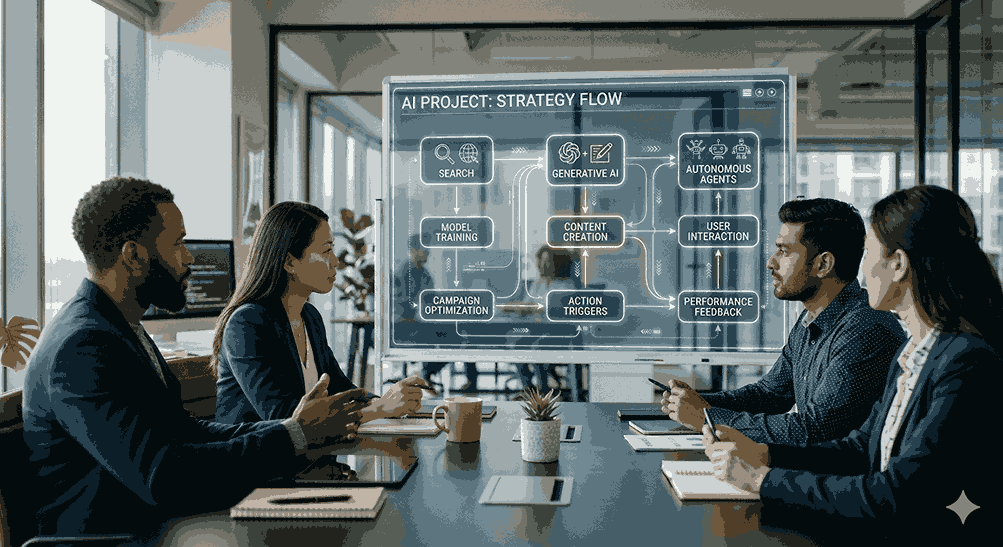
The digital landscape has fractured into four distinct, highly competitive arenas. Consequently, understanding how to adapt to seo aeo geo and aio differences in 2026 is the absolute baseline requirement for your brand’s survival. By the end of this comprehensive guide, you will master the distinct mechanics behind traditional search, voice-driven answer engines, generative language models, and autonomous digital agents. Furthermore, you will learn exactly how to rebuild your content strategy to dominate all four ecosystems simultaneously.
Decoding the Search Algorithms: A Foundational Comparison
To truly master this complex digital evolution, we must simplify the underlying technology using a highly relatable comparison. Think of the modern internet as an enormous, bustling global restaurant.
Traditional SEO
Acts exactly like a giant, illuminated billboard on the highway. It points hungry drivers directly to your restaurant’s front door, requiring them to walk inside and browse the menu themselves.
AEO (Answer Engine Optimization)
Functions like an incredibly fast drive-thru window. A customer asks a highly specific question, and the answer engine immediately hands them a bite-sized, factual snack without ever requiring them to leave their car.
GEO (Generative Engine Optimization)
Represents a highly skilled personal chef. When a user presents a complex dietary request, the generative model synthesizes ingredients from thirty different farms to cook a completely unique, highly customized meal on the spot.
AIO (Artificial Intelligence Optimization)
Acts as an autonomous digital butler. This agent already knows what the customer wants to eat, actively reads your digital inventory, and securely purchases the meal on their behalf while they sleep.
Mastering these distinct delivery methods guarantees your business never goes hungry. Up next, we will explore the precise technical mechanics required for each framework.
Deeper Dive: The Mechanics of Navigating AI Search Frameworks
Moving beyond the analogies, we must break down the exact technical requirements your website needs to succeed. You cannot simply sprinkle keywords across a page and expect a generative model to respect your authority. Successfully figuring out how to adapt to seo aeo geo and aio differences in 2026 requires strict architectural discipline. Here is the exact mechanical breakdown you must implement to satisfy these competing algorithms:
Traditional SEO Mechanics: You must continue to prioritize highly technical site speed, robust mobile-first rendering, and deep, authoritative backlink profiles to secure standard blue-link placements for transactional browsing.
Answer Engine Structuring: To capture voice search and zero-click featured snippets, you must meticulously wrap your definitive answers in JSON-LD FAQ schema. Specifically, the machine requires absolute factual certainty without any marketing adjectives.
Generative Engine Grounding: Large language models hallucinate without strong grounding. Therefore, you must forcefully inject proprietary data, original survey statistics, and highly unique expert quotes into your text to guarantee citation in AI overviews.
Agentic API Exposure: Autonomous AI agents do not possess visual eyes. Consequently, you must ensure your product pricing, inventory levels, and booking calendars are cleanly exposed through machine-readable APIs so digital assistants can execute transactions securely.
What is the difference between AEO and GEO mechanically?
The fundamental difference between these two frameworks relies entirely on the complexity of the user’s intent. AEO strictly targets binary, factual retrieval. If someone asks Siri, “What time does the hardware store open?”, they want a single data point. GEO actively targets complex synthesis. If a user asks ChatGPT, “Compare the durability of oak versus maple flooring for a high-traffic retail store,” the generative engine must deeply evaluate, contrast, and synthesize multiple expert opinions. Therefore, AEO demands brevity, while GEO demands incredible semantic depth.
Real-World Case Studies: Surviving AI Search Algorithm Changes
Let us ground this complex technical theory in absolute reality. How are highly successful companies actually leveraging these new frameworks today?
Consider a global travel insurance provider that noticed a terrifying 35% drop in organic traffic to their informational blog. Instead of panicking, they aggressively pivoted their digital strategy. According to a recent benchmark report published by Search Engine Journal, brands that optimize for generative citations see a massive increase in highly qualified, high-intent referral traffic.
Knowing this, the insurance company stopped writing generic “travel tips.” Instead, they utilized GEO strategies to publish highly technical, statistically dense whitepapers on international medical evacuation protocols. As a result, generative tools like Perplexity and Google’s AI Overviews began exclusively citing their proprietary data, driving massive brand authority.
In a contrasting scenario, a boutique hotel chain focused entirely on AIO (Artificial Intelligence Optimization). They realized tech-savvy travelers were increasingly using AI agents to plan and book their vacations autonomously. The hotel completely overhauled its backend code, ensuring its room availability and pricing tables were perfectly mapped with machine-readable schema. Consequently, when a user commanded their AI assistant to “book a luxury room in Miami under $400,” the hotel captured the transaction instantaneously, entirely bypassing the traditional, click-heavy booking funnel.
5 Steps for How to Adapt to SEO AEO GEO and AIO Differences in 2026
First, categorize your existing web pages by their exact user intent. Label them strictly as transactional (SEO/AIO) or informational (AEO/GEO).
Next, aggressively reformat your informational pages to include a “Bottom Line Up Front” (BLUF) summary. Place a bold, two-sentence factual answer at the very top of the page to satisfy the fast-paced answer engines.
Then, enrich your long-form content with proprietary information gain. Add a custom infographic, a unique expert interview, or raw data sets that a generative AI cannot simply scrape from Wikipedia.
After that, rigorously test your website’s structured data using official schema validation tools. Ensure your business hours, product reviews, and pricing are perfectly legible to a blind machine.
Finally, stop tracking raw traffic as your only metric. Specifically, begin tracking brand mentions within LLM outputs to measure your true generative authority.
How does artificial intelligence optimization work for e-commerce?
Artificial intelligence optimization works for e-commerce by removing the human visual interface entirely from the purchasing process. When an AI agent decides to buy a product for its human owner, it does not look at your beautiful website design or your clever banner ads. Instead, it directly reads your server’s data layer. You must utilize advanced Product Schema markup to broadcast real-time stock levels, shipping weights, and exact return policies. If your data is messy or unstructured, the AI agent will instantly abandon your store and purchase from a technically compliant competitor.
Essential Tools for Navigating the Future of Search Engines
WordLift: Automatically adds advanced schema markup to your website, translating text into a structured knowledge graph that AI agents effortlessly comprehend.
Perplexity AI: Use this to reverse-engineer generative success by analyzing which competitors the AI cites and the structural density of their content.
Ahrefs (AI Features): Identify target queries triggering zero-click AI overviews, allowing you to prioritize your AEO efforts effectively.
Schema App: Ensures your complex e-commerce data remains perfectly synchronized with the latest search engine formatting guidelines.
Common Myths About Digital Strategy 2026
Myth: Traditional SEO is completely dead, and websites will soon disappear.
Reality: This is a massive, highly pervasive misconception. While AI handles top-of-funnel research, traditional SEO remains incredibly potent for complex, high-stakes transactional searches. Humans still want to visually browse multiple native websites before buying a house, choosing a lawyer, or purchasing expensive software.
Myth: Large language models do not care about your website’s URL or domain authority.
Reality: The exact opposite is actually true. Generative models heavily prioritize authoritative entities to prevent dangerous hallucinations. According to research from HubSpot, an AI is mathematically far more likely to cite your proprietary data if your domain already possesses a highly trusted, historically established backlink profile.
Myth: Small businesses cannot possibly compete in an AI-driven landscape.
Reality: Local businesses actually hold a massive advantage in AEO and AIO. Generative models deeply struggle with hyper-local, real-time nuance. By rigorously maintaining your Google Business Profile and answering specific local questions on your site, a small business can easily dominate regional voice search queries before massive corporations even notice the trend.
FAQ Section — Adapting Your Search Marketing Strategy
What is the most critical first step?
The absolute most critical first step is shifting your mindset from “keyword density” to “information gain.” You must actively audit your content and ask: “Does this page offer any unique data, perspective, or structure that a generative AI cannot already find on a thousand other websites?”
Will GEO replace human copywriters?
It will completely replace low-effort, generic content creators. However, it significantly elevates the value of true subject matter experts who can conduct original human interviews or run physical experiments.
How do I optimize for autonomous AI agents?
This requires flawless technical execution. You must ensure your site’s architecture uses the absolute latest structured data formats (Schema.org) and provide clean, accessible APIs.