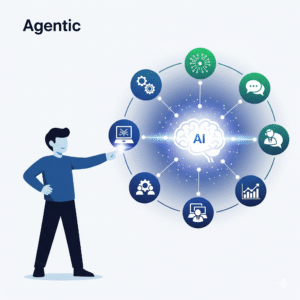
Imagine trying to find a needle in a giant haystack. That’s what sales and marketing used to feel like. Teams would spend hours guessing who to talk to, what to say, and when to say it. It was a lot of hard work. It was also a lot of guesswork. But now, a new kind of technology is changing everything. The AI for sales and marketing is like a super-smart magnet. It helps you find the needles in the haystack instantly. It then tells you exactly how to talk to them.
AI is not here to replace salespeople or marketers. Instead, it’s here to make them a lot smarter and faster. It handles all the tedious, data-heavy work. This frees up people to focus on what they do best: building relationships and coming up with great ideas. This article is your guide to using AI to drive more revenue. We’ll break down what AI is, how it helps at every stage of the customer journey, and show you some real-world examples. By the end, you’ll understand why a strong grasp of AI for sales and marketing is the most important skill for any business in 2025 and beyond.
Predictive Analytics for Sales: Your Crystal Ball
Think of a salesperson’s job like a weather forecaster. In the old days, a forecaster would just look at the sky and make a guess. Now, a forecaster uses a lot of data from satellites and computers to make a very accurate prediction. Predictive analytics for sales is just like that. It uses a lot of data to make very accurate predictions about who is most likely to buy from you.
How does this work? An AI tool can look at a lot of different information. It can look at a customer’s past purchases. Also, It can also look at how they have interacted with your website. It then uses this information to predict who is most likely to become a customer. This helps a salesperson know who to talk to. It also helps them know what to say.
For example, an AI might look at a person who has visited your website three times and has downloaded a free guide. The AI might then tell a salesperson that this person is a “hot lead.” The salesperson can then reach out to that person with a personalized message. This saves a lot of time. It also helps a salesperson win more deals.
AI for Lead Scoring: The Smartest Filter
A “lead” is a person who might be interested in your business. A company can have thousands of leads. In the past, a marketer would have to manually go through all of them. They would then try to guess which ones were the best. This was a very inefficient process. This is where AI for lead scoring becomes a very powerful tool. It is like a super-smart filter that can find the best leads for you.
How does it do this? The AI looks at all your leads. It then gives each one a score. The score is based on a lot of different factors. It looks at their job title, the size of their company, and how they have interacted with your content. A lead with a high score is a person who is very likely to become a customer. A lead with a low score is a person who is not.
This helps both sales and marketing teams. The marketing team can use the score to send the right content to the right people. The sales team can use the score to know who to talk to first. This makes the entire process much more efficient. It also helps a company get more revenue. A great example of this is HubSpot’s AI-driven lead scoring system.
AI for Customer Insights: Your Business Mind-Reader
A lot of companies want to know what their customers are thinking. They want to know what they like. They want to know what they don’t like. In the past, they would have to send out surveys. This was a slow process. It was also hard to get a lot of information. But now, AI for customer insights is making this process a lot easier. It is like having a business mind-reader.
How does AI help with customer insights? An AI can look at a lot of different information. It can read customer reviews, social media posts, and support tickets. It can then figure out what people are feeling about your product. This is called sentiment analysis. It helps you find out what people like about your product and what they don’t.
Here are some ways AI helps with customer insights:
- Personalization: The AI can use customer data to create a personalized experience. For example, it might change the products on a website based on a person’s past purchases. This makes the customer feel special. It also increases sales.
- Product Improvement: The AI can read customer feedback. It can then tell you what features people want. This helps you build a better product.
- Customer Service: The AI can analyze customer support tickets. It can then tell you what questions people are asking most often. This helps you improve your customer service.
Ultimately, these insights help you make smarter business decisions. This is a very powerful use of AI for customer insights.
Real-World AI for Sales and Marketing in Action
Many of the world’s most successful companies are using AI to get ahead. These real-world examples prove that AI for sales and marketing is not just a theory; it’s a powerful tool.
Case Study 1: Netflix’s Recommendation Engine
Netflix is a master of personalization. Their AI recommendation engine is a big reason why. It looks at what you watch, what you search for, and what you rate. It then uses all of that information to suggest new shows and movies. The AI is so smart that it drives up to 80% of the content streamed on the platform. This is a great example of AI for customer insights in action.
Case Study 2: Amazon’s Predictive Analytics
Amazon is a very successful e-commerce company. They use a lot of AI. One of the ways they use it is with predictive analytics. The AI looks at your browsing history and past purchases. It can then predict what you will buy next. It then shows you products that you are likely to be interested in. This makes the shopping experience much more personal. It also increases sales. This is a great example of predictive analytics for sales.
Case Study 3: The Marketing Agency’s Ad Campaign
A marketing agency was hired to create a lot of personalized video ads for a client. They needed to create thousands of different videos for different customers. This would have been impossible with a traditional video production team. So, they used an AI video generator. They gave the AI a script and a few images. The AI then created thousands of unique video ads for them in a short amount of time. The campaign was a huge success. The company got a lot of new customers. This is a great example of how AI can help you scale your content.
Top Tools for a Smarter Sales and Marketing Workflow
The market is full of fantastic tools that can supercharge your sales and marketing workflow. Here are a few to get you started.
- HubSpot: This is a very popular marketing platform with a lot of AI features. It has a tool that can help you with your content strategy. It also has an AI-driven lead scoring system.
- Chorus.ai: This tool uses AI to analyze sales calls. It can tell a salesperson what they are doing well and what they need to work on. This helps a salesperson get better at their job.
- Gong: This is another tool that analyzes sales calls. It can give a salesperson a score on their calls. It can also give them suggestions on how to improve.
- Crayon: This tool uses AI to help you with your competitive analysis. It can tell you what your competitors are doing. It can also tell you what they are doing well. This helps you get an edge in the market.
These tools are at the forefront of the AI for sales and marketing space. They can help you take your sales and marketing to the next level.
Best AI Tools for Content Creation: Your Ultimate Guide
Conclusion: AI and Human Collaboration is the Key
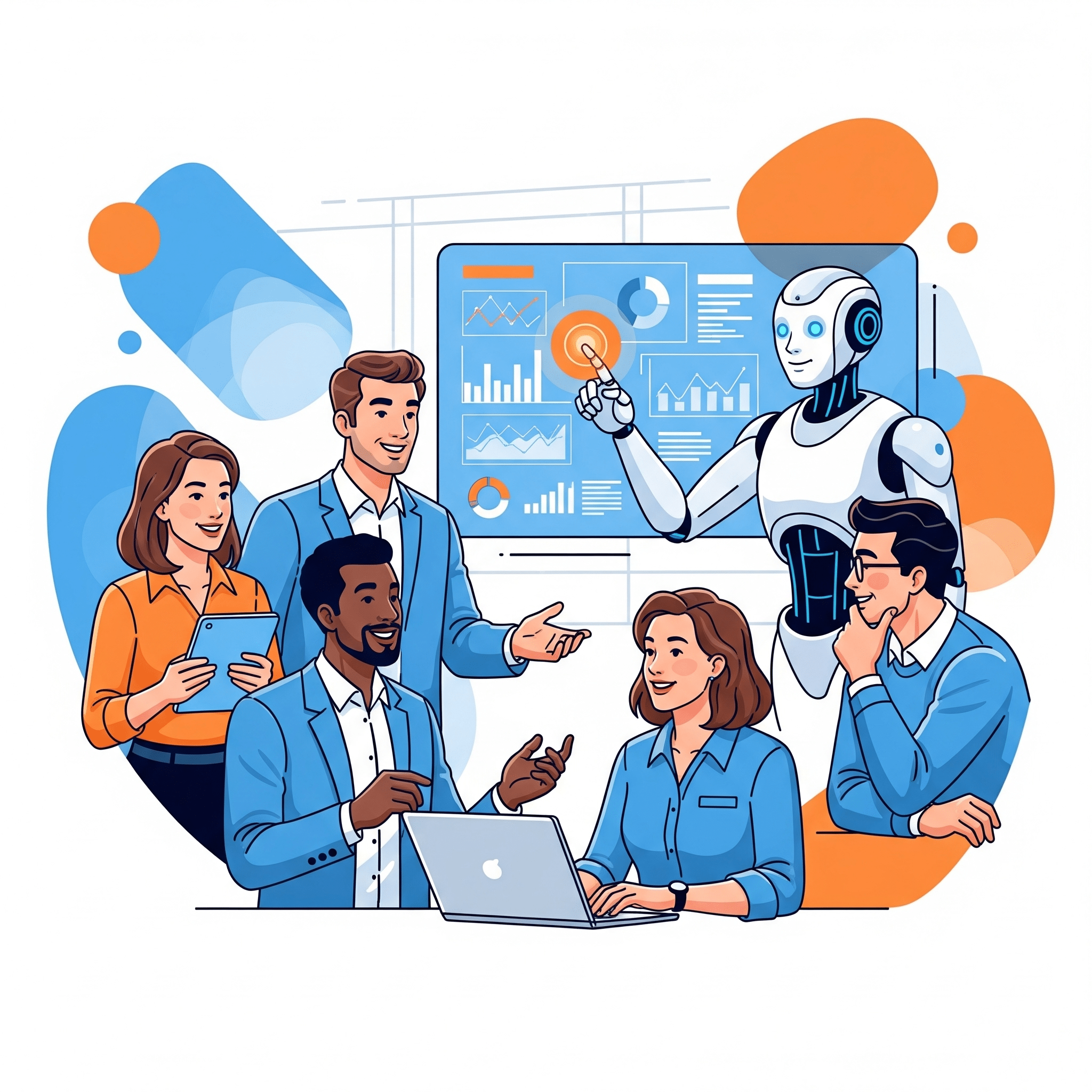
The future of sales and marketing is not about AI replacing people. It is about a partnership between humans and AI. The AI handles the mundane tasks. The human handles the creative, emotional, and strategic parts of the job. This is the new reality of the sales and marketing world.
A McKinsey report states that AI is a tool that helps people be more productive. It is not a replacement for human creativity. [See source](https://www.mckinsey.com/capabilities/quantumblack/our-insights/the-state-of-ai). The most successful companies will be the ones that redesign their workflows to include AI. By embracing this technology, you can be more productive, more creative, and more valuable. This will help you get ahead in the market and drive more revenue for your business.