Hiring new people for a job used to be a long process. First, a recruiter would post a job ad. Then, they would wait for hundreds of resumes to come in. Next, they would spend days and days reading each one. They would also try to schedule interviews with a lot of back and forth. This method was slow, and it was often frustrating for everyone involved. But now, all of that is changing. AI recruitment use cases are making the entire hiring process faster, smarter, and fairer.
Think of AI as a super-powered assistant for recruiters. This assistant can handle all the boring, repetitive tasks. It can read resumes in seconds. It can also schedule interviews without a single email. This frees up human recruiters to do what they do best: talk to people, build relationships, and find the perfect person for the job.
This article is your guide to the future of hiring. We’ll explore five of the most important AI recruitment use cases. You will also see how real companies are using these tools. By the end, you’ll understand why AI isn’t just a trend. It’s a key part of every successful hiring strategy.
Use Case 1: AI for Candidate Sourcing (AI recruitment use cases)
Finding the right people for a job is often like looking for a needle in a haystack. You have to search through a huge number of potential candidates. This is a process called “sourcing.” In the past, recruiters had to manually search job boards and professional sites. This was a tedious and time-consuming process. But with AI, it’s a whole new game.
AI for candidate sourcing is like a super-smart search engine. It can search through millions of online profiles, resumes, and social media sites. It then finds the people whose skills and experience are a perfect match for the job. The AI can even find “passive candidates.” These are talented people who aren’t actively looking for a job but might be open to a new opportunity. Here’s how it works:
- AI identifies skills: The AI reads the job description and understands what skills are needed. It can also find similar skills and titles that a human might miss.
- It finds people everywhere: The AI searches the web, not just one or two websites. This gives the recruiter a much larger and more diverse group of people to choose from.
- It ranks the candidates: The AI then scores each person based on how well they match the job. This helps the recruiter quickly see who is the best fit.
By using AI for this first step, recruiters can find more qualified candidates in a fraction of the time. This is one of the most powerful AI recruitment use cases.
Use Case 2: AI for Applicant Screening
Once a job is posted, a company can receive hundreds, or even thousands, of applications. It is impossible for a human to read every single one carefully. As a result, a lot of great candidates can be missed. This is where AI for applicant screening comes in. It helps recruiters sort through all the applications fairly and efficiently.
An AI screening tool is like having a team of assistants. They read every single resume in seconds. The AI looks for keywords, skills, and experience. It also looks for things that might be a problem, like large gaps in a work history. Crucially, it does this without seeing a person’s name, age, or gender. This helps reduce unconscious bias in the hiring process. This leads to a more diverse and fair hiring process.
When the AI is done, it gives the recruiter a list of the best candidates. The recruiter can then spend their time talking to these top candidates. This use of AI saves days or even weeks of work. It also ensures that every application gets a fair look.
Use Case 3: AI for the Hiring Process
The hiring process is about more than just finding and screening candidates. It’s about all the steps in between, like scheduling interviews and answering questions. This is where AI can make a huge difference. By automating these tasks, AI makes the process smoother for both the recruiter and the candidate.
Here are some ways that AI is being used in this area:
- Automated Interview Scheduling: Have you ever tried to schedule a meeting with a lot of people? It can be a nightmare. AI tools can look at everyone’s calendar and find a time that works for everyone. The candidate can also pick a time that works for them. This removes the frustrating back and forth of scheduling.
- Conversational AI Chatbots: These are like smart chatbots. They can be on a company’s website or in a messaging app. Candidates can ask questions about a job, the company, or the benefits, and the chatbot can answer them instantly. This gives the candidate a great experience. It also means the recruiter doesn’t have to answer the same questions over and over again.
This kind of AI for hiring process automation shows that a company is modern and efficient. It makes a good first impression on potential employees.
Case Studies: Real-World AI Recruitment Use Cases (AI recruitment use cases)
Many of the world’s most successful companies are already using AI to transform their hiring. These examples show how AI recruitment use cases are being put into practice.
Case Study 1: Unilever’s AI-Powered Screening
Unilever is a massive global company. They receive more than 250,000 job applications each year. This is a huge number of applications to manage. Unilever started using an AI system to handle this. The system uses games and video interviews to assess a candidate’s skills and potential. The AI then analyzes the results and identifies the best candidates for the job. This approach has led to a 75% reduction in time-to-hire. It has also helped the company hire a more diverse group of people. This is because the AI focuses on skills and not on a person’s background.
Case Study 2: Hilton Worldwide’s AI Chatbot
The Hilton hotel chain needed a way to handle a huge number of applicants for their entry-level jobs. They wanted to be able to talk to every single applicant, but they didn’t have enough time. So, they created an AI chatbot named “Olivia.” Olivia lives on their website. She can answer a candidate’s questions about a job and a company. She can also schedule interviews. Using Olivia, Hilton was able to speak with every candidate. They also reduced the time it took to hire someone. This made the hiring process better and more personal for everyone.
Case Study 3: The Tech Company’s Talent Forecast
A tech company used to spend a lot of time trying to find new software engineers. They also had a problem with their current engineers leaving for other jobs. The company started using an AI tool to help them. The AI tool looked at a lot of data. It predicted which employees might leave the company soon. It also helped the company identify the skills they would need in the future. With this information, the company was able to give their current employees more training and opportunities. They also used the AI to find new talent. They were able to reduce employee turnover. This saved them a lot of money and time. This is a great example of an advanced AI recruitment use case.
These examples from large companies prove that AI is a very effective tool for hiring.
Getting Started: How to Use AI in Your Hiring Process
You don’t have to be a big company to use AI. There are a lot of great tools out there for businesses of all sizes. The best way to get started is to start small. Here are some simple steps to help you begin:
- Choose one problem to solve: Think about the biggest challenge in your hiring process. Is it getting enough resumes? Or maybe it’s scheduling interviews? Pick one problem to start with.
- Find a tool that solves that problem: There are many tools available. You can find one that specializes in what you need. If your problem is scheduling, find a tool that can automate that.
- Start with a free trial: A lot of AI tools offer a free trial. This is a great way to try out the tool and see if it works for you. You don’t have to spend any money to get started.
- Listen to your team: Ask your recruiters and hiring managers what they think. They are the ones who will be using the tool. Get their feedback and make sure the tool is helping them.
By following these steps, you can slowly start to use AI to improve your hiring process. It’s a great way to improve your business and make your team happy.
Top AI Tools for Your Recruitment Needs (AI recruitment use cases)
The market is full of fantastic AI tools that can help with AI for the hiring process. Here are a few that are very popular and effective.
- Paradox (Olivia): This tool is an AI chatbot that helps with scheduling and answering questions. It makes the candidate experience fast and easy. [See source](https://www.paradox.ai/).
- Eightfold.ai: This is a powerful AI tool that helps with sourcing. It also helps with internal mobility and skill-matching. It’s great for large companies that want to find talent in a fair way. [See source](https://eightfold.ai/).
- HireVue: This tool helps companies conduct video interviews. It uses AI to analyze the interviews and provide insights to the recruiter. This helps them make better and more objective hiring decisions. [See source](https://www.hirevue.com/).
- Pymetrics: This tool uses games to assess a candidate’s skills and potential. It helps remove bias. It also helps companies find people who are a good fit for their culture. [See source](https://www.pymetrics.ai/).
These tools represent the very best of AI for applicant screening and sourcing. They can help you improve your hiring process in a big way.
The Future of the Hiring Process is Human-Driven
Some people worry that AI will make recruiters obsolete. However, a report from Gartner suggests that this is not the case. They predict that by 2036, AI will create over half a billion new jobs. [See source](https://www.gartner.com/en/human-resources/topics/artificial-intelligence-in-hr). Instead of taking jobs, AI is changing them. It is automating the tedious parts of the job. This allows human recruiters to focus on the human parts of the job. These parts are:
- Building relationships: AI cannot build trust or connect with a candidate on a personal level.
- Empathy: AI cannot understand a candidate’s feelings or their unique story.
- Strategic thinking: AI cannot decide on the long-term vision for a company.
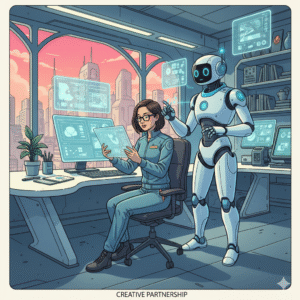
The future of hiring is a partnership between humans and AI. AI is the tool that makes the process fast and efficient. You are the human who makes it personal and strategic. By embracing AI, you can make your hiring process better. You will also be able to find and keep the best people for your team. The future is here, and it’s powered by AI, but driven by humans.
AI Job Market Predictions: Is Gen Z Right to Fear Permanent Unemployment?