In our increasingly interconnected world, the ability to communicate across languages is no longer a luxury – it’s a necessity. Businesses aiming for global reach, educators connecting with diverse student populations, and individuals seeking to understand different cultures all face the fundamental challenge of language barriers. Traditionally, overcoming these barriers meant relying on human translators, a process that can be time-consuming, expensive, and sometimes difficult to scale.
However, a powerful technological shift is revolutionizing how we approach cross-lingual communication. The rise of sophisticated AI translation tools is breaking down these barriers with unprecedented speed, accuracy, and affordability. This isn’t about replacing human translators entirely; rather, it’s about augmenting their capabilities and providing accessible translation solutions for a vast array of content and communication needs.
This comprehensive guide will explore the transformative power of AI translation tools and their impact on global content AI. We’ll delve into how these intelligent systems work, examine their practical applications across various industries, showcase real-world successes, and provide actionable insights on how you can leverage these tools to expand your global footprint and connect with audiences worldwide. It’s time to unlock the potential of truly global communication, powered by the intelligence of AI.
The Lingering Challenge of Language Barriers in a Globalized World
Despite advancements in technology, language differences remain a significant hurdle for individuals and organizations operating on a global scale. These barriers can manifest in numerous ways:
- Limited Market Reach: Businesses unable to translate their websites, marketing materials, and product information effectively are inherently limited in their ability to reach international customers.
- Communication Breakdowns: Misunderstandings and errors in translation can lead to confusion, damage business relationships, and even create safety hazards in certain contexts.
- Content Creation Bottlenecks: The time and cost associated with traditional translation workflows can slow down the process of creating and distributing content to global audiences.
- Accessibility Issues: Individuals who do not speak the dominant language of a particular region or platform can be excluded from accessing vital information and services.
The demand for efficient and accurate translation solutions has never been higher. This is precisely where AI translation tools offer a compelling and increasingly sophisticated answer.
How AI Translation Tools Work: From Statistical Models to Neural Networks
The evolution of AI translation tools has been remarkable. Early systems relied on statistical models, which analyzed large amounts of bilingual text to identify patterns and probabilities of word and phrase correspondences. While these systems were a significant improvement over manual lookup, they often struggled with nuanced language, idiomatic expressions, and maintaining context.
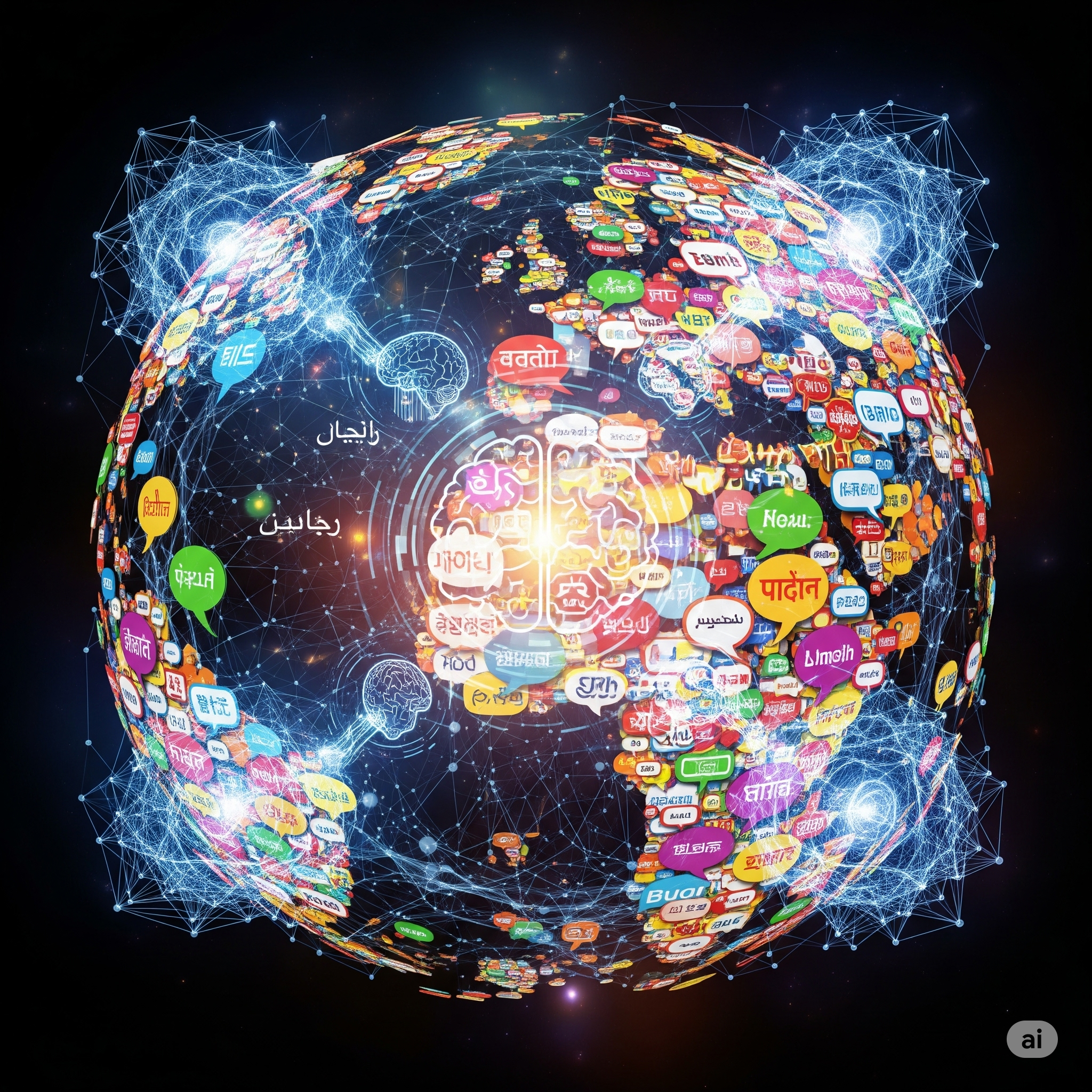
The current generation of AI translation tools is powered by neural machine translation (NMT). These systems utilize deep learning algorithms that mimic the structure and function of the human brain. NMT models learn to translate entire sentences at once, considering the context and relationships between words. This allows for more fluent, natural-sounding, and accurate translations.
Key advancements in NMT include:
- Attention Mechanisms: These allow the AI to focus on the most relevant parts of the source sentence when translating each word, improving accuracy and handling of long sentences.
- Transformer Networks: Architectures like the Transformer, which powers many state-of-the-art AI translation tools, excel at capturing long-range dependencies in text, leading to more coherent and contextually appropriate translations.
- Continuous Learning: Many AI translation tools continuously learn and improve based on new data and user feedback, leading to increasingly accurate and nuanced translations over time.
Real-World Impact: AI Translation Tools Powering Global Content
The practical applications of AI translation tools are vast and span numerous industries. Here are a few examples of how businesses are leveraging these technologies to expand their global reach and streamline their operations:
Case Study 1: “GlobalEats,” an Online Food Delivery Platform
The Challenge: GlobalEats wanted to expand its services to non-English speaking markets in Europe and Asia. Translating their website, mobile app, menus, and customer support materials using traditional methods would have been prohibitively expensive and time-consuming for the fast-growing startup.
The Solution: GlobalEats integrated an AI translation tools API into their platform. This allowed them to automatically translate all their digital content into multiple languages, including French, Spanish, Mandarin, and Japanese. They also implemented AI-powered customer support chatbots that could understand and respond to inquiries in these languages.
The Result: GlobalEats rapidly expanded its user base in new international markets. The speed and affordability of AI translation tools allowed them to launch in multiple countries simultaneously, significantly accelerating their growth and market share. They reported a substantial increase in customer engagement and satisfaction in their localized markets.
Case Study 2: “EduGlobal,” an Online Learning Platform
The Challenge: EduGlobal aimed to make its educational courses accessible to a global audience. Translating the video lectures, course materials, and assessments into dozens of languages using human translators was deemed impractical due to the sheer volume of content.
The Solution: EduGlobal adopted a suite of AI translation tools, including AI-powered video subtitling and translation services. They also used AI to translate course documents and create localized versions of their platform interface. While human reviewers oversaw the quality of critical content, AI handled the bulk of the translation work.
The Result: EduGlobal dramatically increased the accessibility of its courses, attracting a significantly larger and more diverse student body from around the world. The use of AI translation tools allowed them to offer multilingual content at a fraction of the cost and time associated with traditional translation methods, democratizing access to education. Cure Writer’s Block & Write Killer Dialogue: The AI Screenwriting Guide
Getting Started: Leveraging AI Translation Tools for Your Global Content
Integrating AI translation tools into your workflow doesn’t have to be complex. Here are some beginner-friendly tips and workflows for leveraging these powerful technologies:
- Identify Your Translation Needs: Determine what type of content you need to translate (website, documents, marketing materials, customer support) and which languages are your priority.
- Explore Available AI Translation Platforms: Research various AI translation tools and platforms. Many offer free trials or tiered pricing plans. Consider factors like accuracy, speed, supported languages, ease of integration, and cost.
- Start with Website Translation: For businesses aiming for global reach, translating your website is often the first step. Look for AI translation tools that offer website translation plugins or integrations.
- Utilize AI for Document Translation: Numerous AI translation tools can quickly and accurately translate documents in various formats (e.g., Word, PDF). This can be invaluable for internal communication and sharing information with international partners.
- Consider AI for Customer Support: Implement AI-powered chatbots that can handle basic customer inquiries in multiple languages, improving response times and customer satisfaction.
- Combine AI with Human Review: For critical content where accuracy and cultural nuance are paramount, consider using AI translation tools for the initial translation and then having human professionals review and edit the output. This hybrid approach can offer the best balance of speed, cost-effectiveness, and quality. As suggested by resources like HubSpot, accurate localization is key to engaging global audiences effectively.
Essential AI Translation Tools for Breaking Language Barriers
The market for AI translation tools is dynamic and offers a wide range of solutions. Here are a few prominent examples:
- Google Translate (https://translate.google.com/): A widely accessible and free AI translation tool that supports a vast number of languages and offers website, text, and document translation.
- DeepL (https://www.deepl.com/translator): Known for its high accuracy and natural-sounding translations, DeepL supports a growing number of languages and offers both free and paid versions.
- Microsoft Translator (https://translator.microsoft.com/): Integrates seamlessly with Microsoft products and offers text, voice, image, and document translation capabilities.
- Amazon Translate (https://aws.amazon.com/translate/): A scalable and cost-effective neural machine translation service ideal for businesses looking to translate large volumes of content.
- memoQ (https://www.memoq.com/): While a more comprehensive translation management system often used by professional translators, memoQ also incorporates powerful AI translation tools and features.
Conclusion: A World Without Language Barriers, Powered by AI
AI translation tools are rapidly transforming the landscape of global communication. By breaking down language barriers with increasing accuracy and efficiency, these technologies are unlocking unprecedented opportunities for businesses, educators, and individuals to connect, collaborate, and learn from one another across the globe.
The ability to seamlessly translate global content is no longer a distant dream but a tangible reality. Whether you’re a small business looking to reach new markets or an individual seeking to connect with people from different cultures, AI translation tools offer a powerful and accessible pathway to a more interconnected and understanding world. Embrace the power of these intelligent systems, and start speaking to the world today.
Your Next Plot Twist is One Click Away: The Guide to AI Storytelling