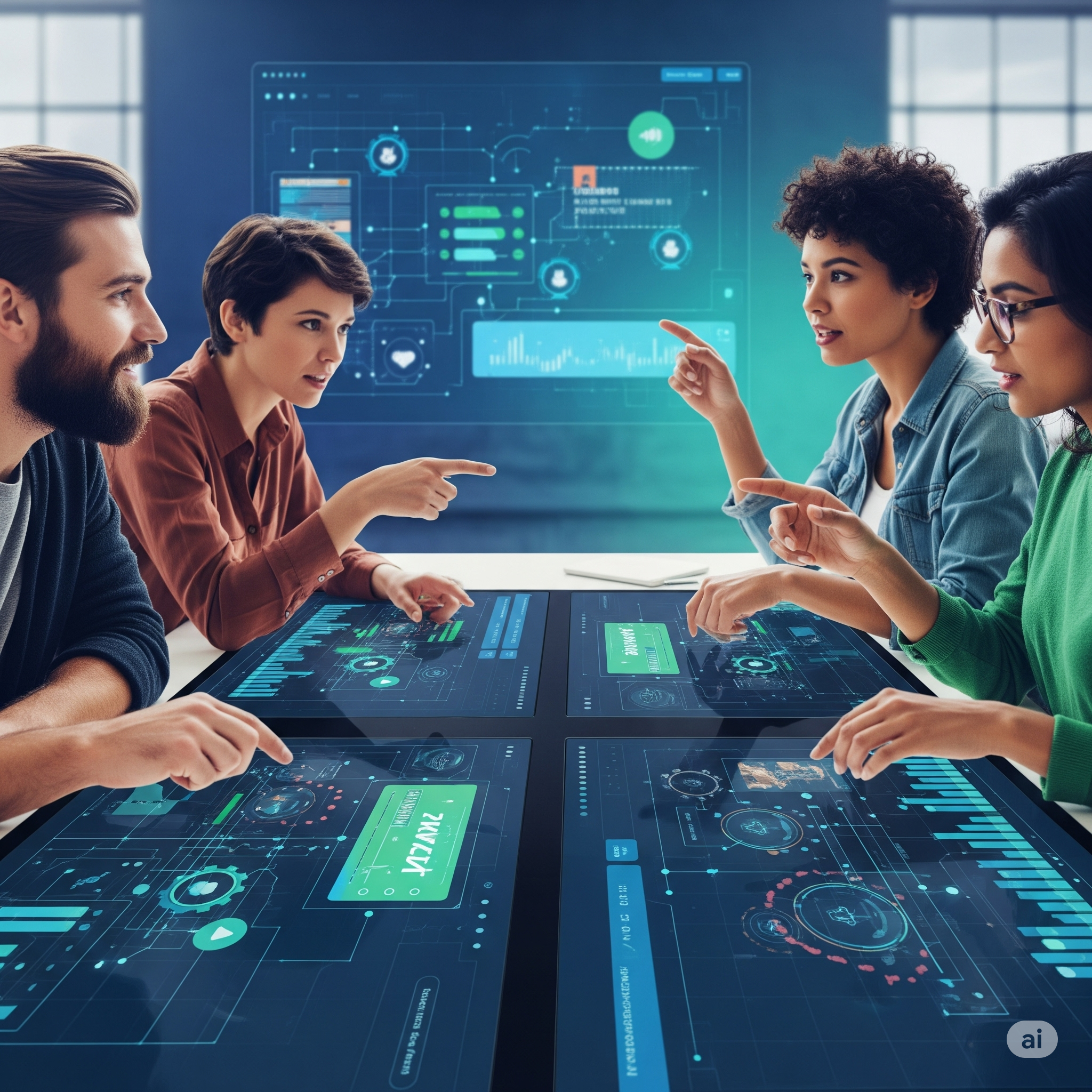
Artificial intelligence is rewriting workplace norms, from automating reports to generating marketing content and even designing new products. Yet, far from replacing us, these smart technologies spotlight what only humans can offer: empathy, creativity, critical thinking, and the ability to connect deeply with others13. The modern workplace needs professionals who can complement AI, not compete with it. Welcome to the age where human skills are your greatest career accelerators. (Human Skills in AI Era)
Why Human Skills Matter (Now More Than Ever)
The Core Strengths AI Can’t Replace
AI handles routine analysis at scale, but it can’t:
- Empathize with a stressed colleague or client.
- Invent a new product inspired by an unmet human need.
- Unpack the emotional subtext in a negotiation.
- Rally a team behind a bold vision.
- Interpret ambiguous feedback in cross-cultural settings4.
In short, the “human skills AI era” emphasizes not just surviving, but thriving, by doubling down on what makes us different.
Six Essential Human Skills for the AI Era
According to dozens of business leaders and workforce surveys36:
- Critical thinking
- Creativity and innovation
- Emotional intelligence
- Communication
- Collaboration and teamwork
- Adaptability and resilience
Creativity in AI Work: The Perfect Partnership
The most effective professionals don’t see AI as a threat; they use it as a creative partner79. For example, an architect might use Midjourney or DALL-E to explore novel design patterns, then refine the vision using human insight and emotional resonance7.
Real-World Example: Creativity Unleashed with AI
When a designer at a global apparel brand tackled a new 3D-printed clothing line, AI tools helped generate 500 pattern ideas in a matter of hours. Instead of searching for one “right” design, the designer could sift through patterns, remix concepts, and quickly validate ideas with their team—raising the overall creative bar7.
Key Takeaway: AI extends your creative reach, but the spark comes from human intuition and originality.
The Empathy Advantage: Building Trust in Digital Workplaces
As remote teams and hybrid schedules become the norm, human connection and empathetic leadership are in high demand2.
Industry Scenario: AI and Human Connection in Healthcare
A hospital system integrated AI for patient data analysis and scheduling. But it was their nursing leaders—skilled in reading emotional cues and providing comfort—who ensured patients stayed engaged, satisfied, and compliant with their treatments. The result? Increased patient trust, decreased error rates, and better health outcomes5.
Case Study #1: Driving Business Intelligence with Human Skills
Company: Digital Marketing Agency
Facing growth challenges, a mid-sized agency turned to AI tools like Tableau and Power BI for analytics. But it was the account managers’ interpersonal skills—listening deeply to clients, uncovering needs that data didn’t expose, and translating insights into compelling narratives—that won and retained major accounts. They became known for blending data fluency with personal rapport.
Lesson: Your “data story” is only as persuasive as your ability to communicate and tailor insights for each audience.
Case Study #2: Human Creativity and AI Collaboration at Work
Professional: Marketing Strategist at a Tech Startup
Tasked with launching a new SaaS platform, the strategist used ChatGPT and Jasper AI for quick copy drafts and trend research. But the campaign’s standout feature—a series of quirky “what if” videos—came from team brainstorms powered by a culture of psychological safety. AI freed up time, but success was built on unfiltered human ideation and risk-taking.
Lesson: AI tools multiply output, but innovation depends on fostering creative confidence and group synergy8.
AI as a Co-Pilot: Leading Tools to Enhance Creative and Analytical Skills
Harnessing the human skills AI era requires the right technology partners—tools that empower rather than overshadow your strengths. Here are several that boost creativity in AI work and human impact in decision-making:
| Tool | Purpose & Human Skill Match | Official Site |
|---|---|---|
| Tableau | Visualizes complex data for creative exploration | Tableau |
| ChatGPT | Aids in ideation, writing, and empathetic conversation | OpenAI |
| MonkeyLearn | Automates text analysis; you interpret results uniquely | MonkeyLearn |
| Power BI | Transforms business data into visual narratives | Power BI |
| Canva | AI-powered design, democratizing creative production | Canva |
| Mural | AI brainstorms, maps ideas, and boosts real-time teamwork | Mural |
Developing Human Skills in the AI Workplace
Beginner-Friendly Tips to Thrive
- Make Human Skills a Daily Practice
Dedicate time to hone one human skill each week—whether that’s active listening, giving constructive feedback, or brainstorming new solutions. - Leverage AI for Routine Tasks
Automate emails, data sorts, and scheduling with AI tools, freeing your mind for big-picture thinking. - Join or Launch Cross-Functional Workshops
Encourage open dialogue, creativity, and “soft skill” sharing. Practicing with teammates helps build confidence. - Seek Continuous Feedback
Use tools like Otter.ai or Notion AI to review and improve your communication and critical thinking. - Celebrate Curiosity and Failure
Document bold ideas (even the failed ones), and ask how AI could help refine, not replace, human insights.
The Business Impact: Turning Data into Decisions—and Profit
The magic happens where data-driven insights meet emotional intelligence and creative storytelling. Here’s how industries leverage the synergy:
- Retail: Personalized recommendations combine AI predictions with salespeople’s empathy for richer customer experiences.
- Finance: AI spots fraud; analysts interpret anomalies and adjust approaches based on relationship history.
- Education: Learning platforms use AI to adapt materials, but great teachers bring lessons to life.
For more, explore in-depth insights at OpenAI and McKinsey.
Trending Variations and Future-Ready Skills
Thanks to continuous keyword research and workforce analysis, the most in-demand trends for the human skills AI era in 2025 include:
- Human-AI collaboration
- Emotional intelligence in digital environments
- Creative problem-solving in business
- Resilience in rapidly-changing workplaces
- Data-driven storytelling
- Agile learning and upskilling
Mastering these will be essential for standing out in a tech-driven market.
Frequently Asked Questions
Is AI replacing soft skills in the workplace?
No—AI automates some technical tasks, but makes soft skills (empathy, creativity, collaboration) more valuable and visible110.
How can professionals enhance creativity in AI work?
Use AI for brainstorming, rapid prototyping, and routine execution—but always infuse projects with your unique perspective and emotional insight7.
Which tools best support human skills in the AI workplace?
Options like Tableau, ChatGPT, Canva, and Mural empower humans to analyze, create, and connect at scale.
Can soft skills be measured and trained?
Yes, through feedback, coaching, peer learning, and reflective practice.
Adaptive Learning AI: How AI is Tailoring Education for Every Student
Conclusion: Humans, Not Just Algorithms, Shape the Future
The story of the human skills AI era isn’t one of rivalry, but of reinvention. Leaders and professionals now have new freedom—to automate what’s repeatable, and invest effort in what’s original, heartfelt, and uniquely human24. Whether launching a business, mentoring a team, or designing tomorrow’s products, the competitive edge is yours when you pair machine intelligence with empathy, adaptability, and creativity in AI-powered work. Embrace this partnership. The future belongs to those most human.
AI research tools: Streamlining Literature Reviews and Data Synthesis


