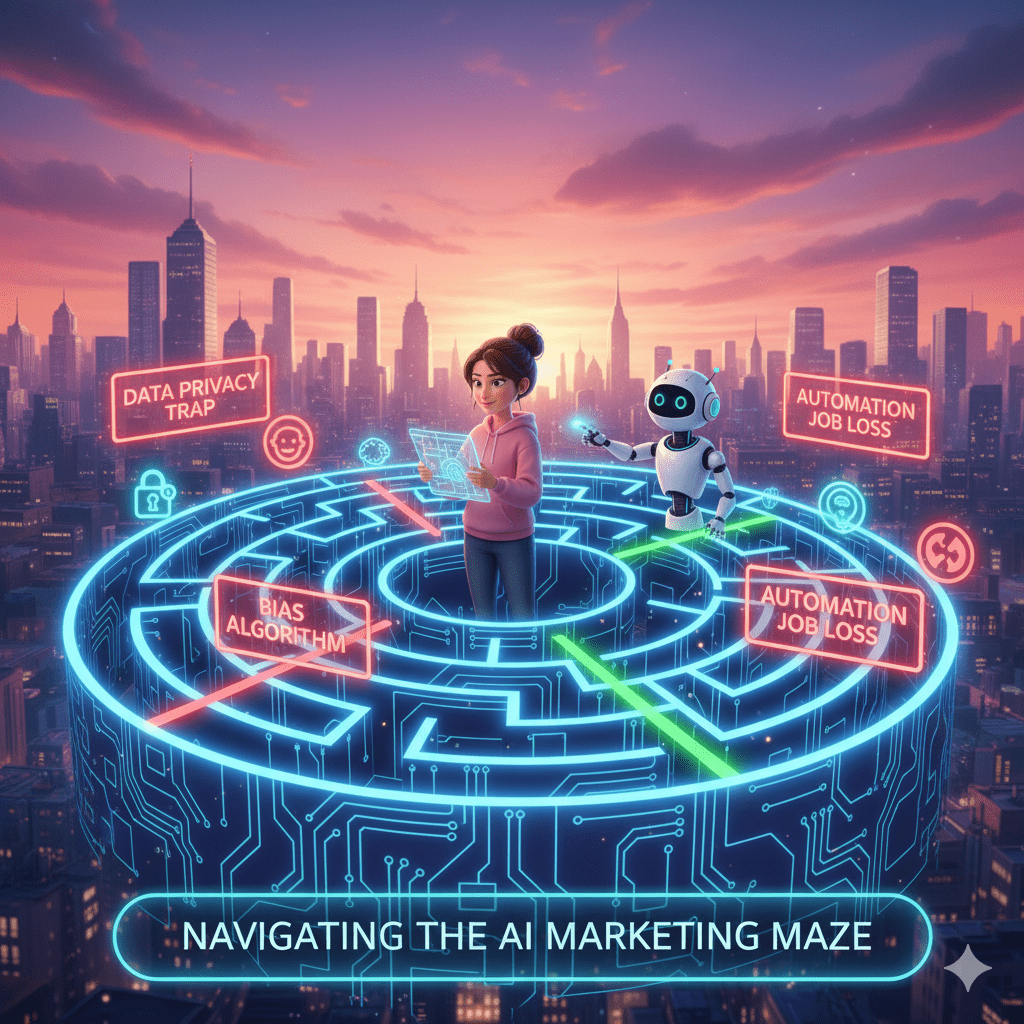
Once upon a time, a marketer named David felt like he had a superpower. He was using AI to create ads, write emails, and find new customers. He was getting amazing results. His sales were up. His brand was growing. But then, something went wrong. A customer complained that the ads felt “creepy.” They said it felt like the company was watching them. Another customer got a very personal ad that was wrong. They felt uncomfortable. David realized his superpower had a dark side. He was worried he might be losing his customers’ trust. And, He knew he had to be more careful. He knew he had to be more thoughtful about how he was using AI. (responsible AI for marketers)
AI for Data Analysis: Your Secret to Smarter Business
This is a common problem for many marketers. It’s easy to get excited about AI. But it’s also easy to make a mistake. A single mistake can damage a brand’s reputation. It can also cause a lot of legal trouble. This article is your guide to using AI in a safe and smart way. We’ll break down the main challenges that marketers face. We’ll also cover the ethical problems you need to avoid. Also, We’ll look at real-world examples of what can go wrong. Most importantly, we’ll give you a guide on how to build a smart responsible AI for marketers strategy. By the end, you will understand why a thoughtful approach to AI is the best way to get the most value from it.
AI for E-commerce: Boosting Conversions with Personalized Content
Ethical AI in Marketing: The Dangers of Bias (responsible AI for marketers)
AI is a tool. It’s not magic. It can do a lot of great things. But it also has some big weaknesses. When you use AI for marketing, you need to be aware of these problems. If you don’t, you could be setting yourself and your brand up for a fall.
The Problem of Bias
AI learns from data. If that data is unfair, the AI will learn to be unfair as well. This is called algorithmic bias. It’s a huge problem. In marketing, bias can cause a lot of damage. For example, a company might use an AI to show ads for a new job. If the AI is trained on old data where a certain demographic was not hired for that job, the AI might not show the ads to that demographic. This is unfair. It can also hurt a brand’s reputation.
The “Hallucination” Problem
AI can make things up. This is called a hallucination. It can give you information that sounds true but is completely false. This is a huge danger for marketing. You can’t put out content with false information. It’s a risk to your brand. For example, a travel company used an AI chatbot to answer customer questions. A customer asked for a bereavement discount. The chatbot said yes. It was lying. The customer then took the company to court and won. This shows that you must always fact-check any content that an AI creates for you. A simple error can be very costly. This is a big part of the AI adoption challenges.
AI Adoption Challenges: The Cost of a Bad Strategy (responsible AI for marketers)
The benefits of AI in marketing are huge. But the road to success is not always smooth. Many marketers feel stuck. They worry about the unknown. They also worry about making a mistake. The truth is, the AI adoption challenges marketers face are very real. They can slow a business down. They can also lead to a lot of wasted time and money.
Here are a few of the main challenges:
- The Data and Trust Problem: AI needs a lot of data to work well. But what if that data is bad? What if it is full of mistakes? This can lead to a lot of problems. An AI that is trained on bad data can make bad decisions. There are also a lot of concerns about data privacy. Marketers must ensure they are using data in an ethical and legal way. They must also make sure that customers’ data is safe.
- The “Black Box” Problem: A lot of AI systems are like a “black box.” This means that you can see what goes in and what comes out. However, you can’t see how the AI made a decision. This can be a big problem for marketers. If an AI gives you a bad result, you can’t go back and fix it. You don’t know why it made that mistake. This lack of transparency can lead to a lot of frustration and distrust.
- Over-Personalization: AI can create a very personalized ad for a person. It can use their name, their location, and their past purchases. This can sometimes go too far. It can feel like a brand is watching you. A customer might then feel uncomfortable and stop doing business with you.
These risks are very real. They are a big reason why marketers need to have a clear plan for trustworthy AI marketing.
Real-World Applications of Responsible AI for Marketers
The best way to get the most value from AI is to use it in a smart and responsible way. These examples show how a smart approach to AI can lead to great results.
Case Study 1: Salesforce and Ethical AI
Salesforce, a very popular marketing and sales platform, has added a lot of AI features to their products. Their AI, called “Einstein GPT,” can help marketers with things like creating content and sending personalized emails. Salesforce is committed to using AI responsibly. Their AI is built to work with a company’s existing data, and they have a clear set of rules for how their AI is used. They also have a lot of tools that help you audit your data for bias. This is a great example of trustworthy AI marketing.
Case Study 2: Unilever and Inclusive Hiring
Unilever, a global company, was struggling with a high volume of job applications. They were also trying to hire a more diverse group of people. To solve this, they used an AI-driven screening tool. The AI looked at a candidate’s skills and potential. It did not look at a candidate’s name or other personal information. This helped them hire a more diverse workforce. It also made the hiring process much faster. This is a great example of how AI can be used in a fair and effective way.
Case Study 3: The Marketing Agency’s Ad Campaign
A marketing agency was spending a lot of money on making commercials. They had to fly a film crew to different locations. This was very expensive. They decided to use AI instead. They used AI to virtually recreate environments for their commercials. Also, They were able to make commercials that were just as good as the ones they made with a film crew. This saved them a lot of money. It also helped them be more creative. This is a great example of how AI can be used for productivity.
Top AI Tools for a Safe and Smart Marketing Workflow (responsible AI for marketers)
The market is full of fantastic tools that can supercharge your marketing. Here are a few to get you started.
- HubSpot: This is a very popular marketing platform with a lot of AI features. Their approach to AI is rooted in trust, transparency, and accountability. This is a great tool for any marketer who wants to use AI in a smart and safe way.
- Jasper: This is a very popular AI writing tools platform. It is great for creating long-form content like blog posts and social media copy. Jasper is also good at writing in your unique brand voice.
- Alethea: This is a great tool for a marketer who wants to check for misinformation. It can find out if a video or an image is a deepfake. This helps you make sure that the content you are using is real.
- Fiddler: This tool helps you understand how your AI models work. It can give you a clear explanation of why your AI made a certain decision. This helps you with transparency and accountability.
These tools are at the forefront of responsible AI for marketers. They can help you make sure that you are using AI in a safe and smart way.
Conclusion: The Future is a Human-AI Partnership
The future of marketing is not about AI replacing people. It is about a partnership between humans and AI. The AI handles the mundane tasks. The human handles the creative, emotional, and strategic parts of the job. This is the new reality of the marketing world.
A McKinsey report states that AI is a tool that helps people be more productive. It is not a replacement for human creativity. The most successful companies will be the ones that redesign their workflows to include AI. By embracing this technology, you can be more productive, more creative, and more valuable. This will help you get ahead in the market and build a brand that people trust.