Over 64% of searches now end entirely without a single human click to an external website. Imagine pouring your entire quarterly budget into a brilliant, comprehensive blog post, only to watch a generative AI strip your best insights and hand them directly to the user right on the search results page. The sheer, overwhelming frustration of watching your website traffic slowly bleed out while your keyword rankings somehow remain perfectly stable is a uniquely modern nightmare. You are absolutely not doing SEO wrong; the fundamental rules of the digital economy have simply shifted rapidly beneath your feet.
Understanding how to build a zero click marketing strategy is no longer a futuristic thought experiment—it is an immediate, critical survival mechanism. Users are getting faster answers, and platforms are aggressively hoarding user attention. By the end of this deep dive, you will discover exactly how to stop fighting these intelligent search engines. Furthermore, you will learn a proven framework to adapt your content so you can actively thrive within this new, highly disruptive ecosystem.
Exploring the Zero Click Marketing Concept
To truly understand this massive paradigm shift, we must simplify the core mechanics using a highly relatable comparison. Think of traditional SEO marketing as meticulously designing a beautiful billboard that directs drivers to exit the highway and visit your brick-and-mortar store. For two decades, your entire goal was forcing that detour. Conversely, the zero click marketing concept operates exactly like a premium food truck. Instead of begging hungry drivers to come to your location, you park your business directly in the middle of the crowded festival where they are already standing.
You serve them immense value right on the spot. Search engines and AI platforms have fundamentally become those crowded festivals. Features like Google’s AI Overviews, rich snippets, interactive widgets, and direct chatbot responses are designed to satisfy user intent instantaneously. Therefore, if you intentionally hide your best information behind a blue link, the algorithm will simply bypass your domain and extract the answer from a more cooperative competitor. Mastering this landscape requires you to willingly give away the answer upfront to secure deep, long-term brand authority. Up next, we will explore the precise technical nuances required to execute this shift.
Deeper Dive: Mechanics of How to Build a Zero Click Marketing Strategy
Going deeper into the architecture of modern search, it becomes glaringly obvious that traditional click-through rates are a decaying metric. You must actively engineer your digital presence to exist natively within the search engine results page (SERP). Successfully figuring out how to build a zero click marketing strategy requires immense structural discipline.
Here are the foundational elements driving this modern marketing approach:
- Native Content Syndication: You must publish your absolute best thoughts natively on platforms like LinkedIn, X, and YouTube. Algorithms actively reward creators who keep users on their specific platforms rather than linking out.
- Entity Authority Building: Artificial intelligence does not read isolated keywords; it maps entities. You must ensure your brand is heavily associated with specific industry topics across highly reputable third-party directories.
- The BLUF Framework: Always place the “Bottom Line Up Front.” State the exact, definitive answer to the user’s question in the first two sentences of your page to drastically increase your chances of an AI snippet pull.
- Optimizing for Answer Engines: Conversational models require conversational formatting. You must structure your content with distinct, declarative H2 and H3 questions followed immediately by concise, factual answers.
Why are zero click searches increasing so rapidly?
You must fundamentally understand why are zero click searches increasing so rapidly to adapt your business safely. The massive surge is directly fueled by extreme user convenience and the rapid integration of Large Language Models (LLMs). Modern consumers are deeply impatient; they do not want to scroll through a recipe blogger’s life story to find an ingredient list. Consequently, search engines use generative AI to actively extract and synthesize the exact data point the user requested, eliminating the friction of browsing a slow, ad-heavy webpage.
Real-World Zero Click Search Marketing Examples
Let us ground this complex marketing theory in absolute, measurable reality. How are highly successful brands actually surviving this algorithmic shift? Consider a localized chain of physical therapy clinics. Historically, they published long articles detailing various stretches, hoping for website clicks. Recently, they noticed a terrifying drop in blog traffic. According to a landmark industry study published by SparkToro, zero-click searches have officially become the absolute majority of all digital queries.
Knowing this, the clinic aggressively pivoted. They stopped hiding their stretches on their blog and began uploading concise, 60-second video demonstrations directly to their Google Business Profile and YouTube Shorts. As a result, when a local user searched for “sciatica relief,” the clinic’s native video played directly on the SERP. Their website traffic remained low, but their actual clinic phone bookings surged by 45%.
In a contrasting scenario, a B2B enterprise software company wanted to dominate how to rank in ChatGPT and AI overviews. Instead of keyword stuffing, they published highly opinionated, data-dense whitepapers. Consequently, when executives used generative AI to compare software architectures, the models directly cited the brand’s proprietary statistics within the conversational interface. These powerful examples highlight a critical truth: impressions and brand recall often drive more revenue than raw, unfiltered website clicks.
Actionable Steps: How to Build a Zero Click Marketing Strategy Workflow
You cannot simply panic and stop producing content altogether. Transitioning your assets to serve this new reality requires a highly proactive, structured approach. Here is a clear, beginner-friendly workflow to fundamentally future-proof your digital marketing efforts today.
First, aggressively audit your branded search queries. Open an incognito window and type your company’s name. You must ensure your knowledge panel, reviews, and social profiles instantly tell a complete, highly positive story right on page one. Next, utilize the BLUF format on all your highest-traffic informational pages. Answer the core search intent immediately in bold text at the absolute top of the page.
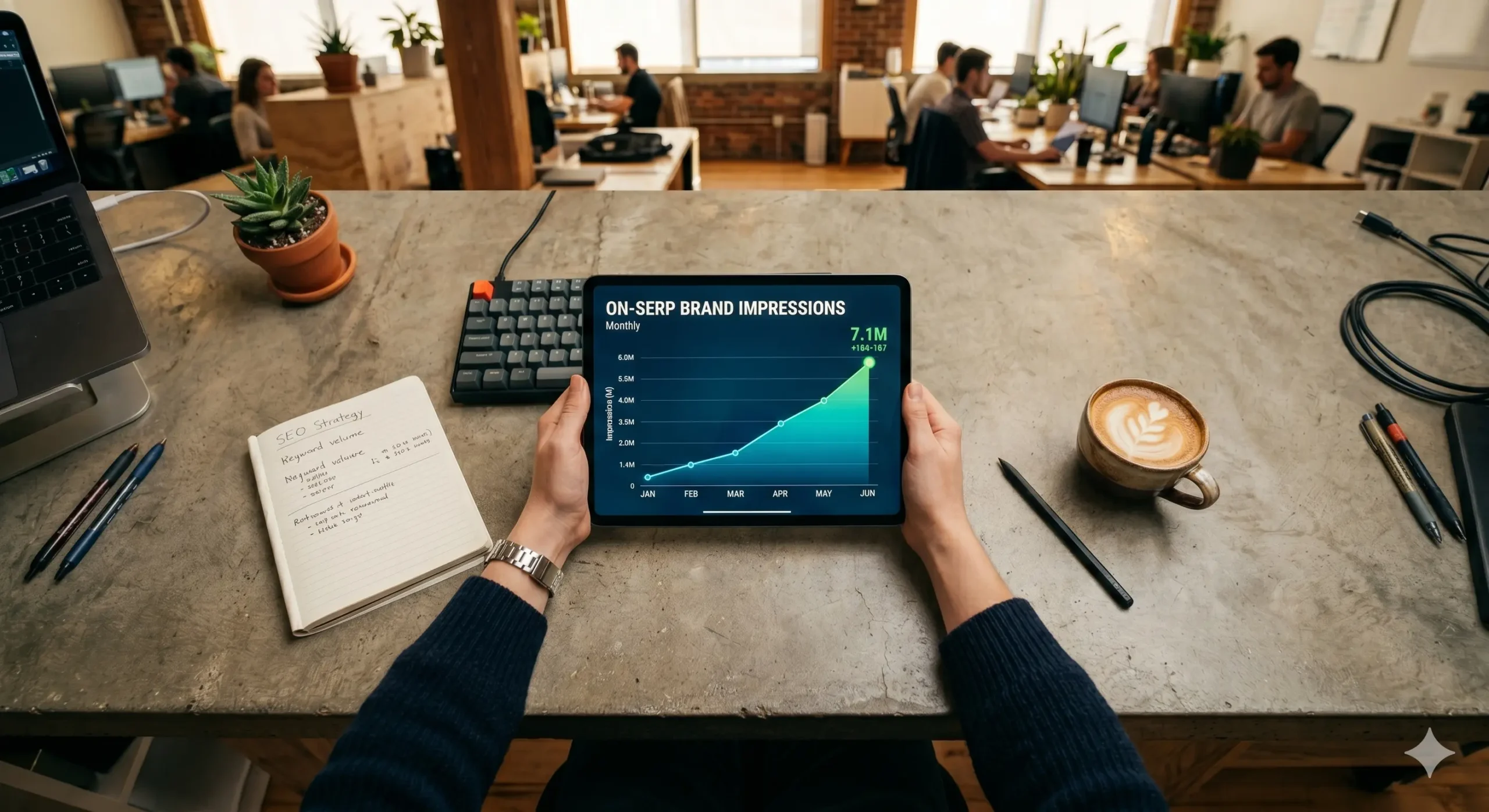
Then, completely ungate your best marketing material. Stop forcing users to hand over an email address to download a basic PDF guide. Publish the most valuable insights directly in a native LinkedIn post or X thread. After that, rigorously optimize your visual assets. Ensure your proprietary charts and infographics contain your company logo, as AI engines frequently pull images directly into generative summaries. Finally, adjust your KPI reporting. Stop reporting solely on website sessions, and begin actively tracking “On-SERP brand impressions” and direct branded search volume.
Insider tips for optimizing for answer engines seamlessly
If you want to truly dominate, you must deploy advanced schema markup effectively. The absolute best way of optimizing for answer engines seamlessly is by wrapping your Q&A content in strict JSON-LD FAQ schema. This specialized code acts as a direct translator for blind AI agents. It explicitly tells the algorithm exactly where the question ends and the factual answer begins. Furthermore, embedding your brand’s unique viewpoint within this structured data heavily encourages generative models to cite you directly as the original, authoritative source.
Essential Tools for Zero Click Optimization
Building a highly reliable, modern tech stack is absolutely critical if you wish to successfully navigate this transition. You can no longer rely purely on traditional keyword rank trackers that only measure blue links. Here are four essential resources you must immediately integrate into your daily workflow:
- Semrush (Sensor & SERP Features): This industry-standard platform is absolutely vital. Their specific SERP feature tracking allows you to see exactly which of your target queries are currently triggering zero-click AI overviews or traditional featured snippets.
- SparkToro: Instead of tracking keywords, this brilliant tool tracks actual audience behavior. It shows you exactly which podcasts, social accounts, and subreddits your target demographic consumes, allowing you to place native content directly in front of them.
- ChatGPT (Custom Search Agents): You can easily build a private, custom AI agent trained strictly to monitor your brand’s reputation. Use it to regularly ask industry-specific questions to see if the LLM actively recommends your products in its unlinked, generative responses.
- Schema App: This enterprise-level platform seamlessly translates your human-readable text into a structured, machine-readable knowledge graph without requiring your marketing team to write a single line of complex JSON-LD code.
Common Mistakes in No-Click Search Trends
Whenever a highly disruptive technological shift occurs, dangerous marketing myths frequently cloud the industry’s perception. Let us decisively address and correct the most common misunderstandings surrounding no-click search trends so you can operate your brand with total confidence.
Myth: Because users aren’t clicking, SEO is completely dead and useless. Reality: This is a massive, highly pervasive misconception. While top-of-funnel informational traffic is shrinking, deep transactional SEO remains incredibly potent. According to Search Engine Land, users still desperately want to visually browse multiple native websites before buying a house, hiring a lawyer, or purchasing expensive enterprise software.
Myth: You should withhold all your best information to force a click. Reality: The exact opposite is actually true. If you intentionally write a vague, clickbait introduction, the AI overviews will completely ignore your website. Consequently, your competitor who willingly provided a clear, concise answer will steal the on-SERP visibility and secure the user’s brand trust.
Myth: You cannot measure the ROI of a zero-click strategy. Reality: While traditional attribution models struggle with it, you can absolutely measure the impact. You must actively shift your analytics focus to monitor direct website traffic, branded search volume, and the overall inbound lead quality. If your branded searches increase, your on-SERP awareness campaigns are successfully working.
FAQ Section — How to Build a Zero Click Marketing Strategy Questions Answered
What exactly is zero click marketing in simple terms?
It is a strategic marketing approach designed to deliver immediate, complete value to a user directly on the search engine results page or social media feed. The primary goal is to build deep brand awareness, trust, and authority without ever requiring the user to click a link and visit your actual website.
Does learning how to build a zero click marketing strategy mean I should stop blogging?
Absolutely not. However, you must fundamentally change how you format those blogs. Your articles must pivot away from generic, easily synthesized facts toward highly unique, opinion-driven, experience-based content that a machine cannot easily replicate or summarize in a single paragraph.
How do I optimize my content to appear in ChatGPT and Google AI Overviews?
You must aggressively prioritize “Information Gain.” Your website must offer proprietary data, original quotes, or highly specific expert insights that do not exist elsewhere on the internet. Generative models crave unique data to prevent hallucination; providing it guarantees your brand gets cited.
What metrics should I track if website clicks are dropping?
You must transition your key performance indicators (KPIs) immediately. Begin tracking your overall “Share of Search” (how often people search for your brand name vs competitors), your direct traffic volume, native social media engagement, and the conversion rates of the highly qualified users who actually do click through to your site.
Conclusion
Navigating the incredibly complex transition toward an AI-driven digital economy absolutely does not require panic or despair. By deeply understanding how to build a zero click marketing strategy, you strategically position your brand to thrive within a heavily fractured, highly intelligent ecosystem. We have thoroughly explored how search engines are aggressively hoarding attention, why you must provide immense upfront value, and how native content distribution builds undeniable digital authority.
Marketing AI Prompts: The Ultimate Guide to Exploding Your Business Growth 🚀
Therefore, do not let this rapid algorithmic evolution paralyze your daily marketing efforts. Treat these AI overviews and zero-click features as massive, free digital billboards for your company. I strongly encourage you to audit your top three highest-traffic informational pages this week. Apply the BLUF framework immediately, ungate your best insights, and watch your brand successfully dominate the next exciting generation of artificial intelligence search.
Marketing AI Books: The Secret Guide to Mastering Creativity and Building the Next Big Thing